
The heart of horror games is fear. For years, developers used scripted scares and predictable enemies.
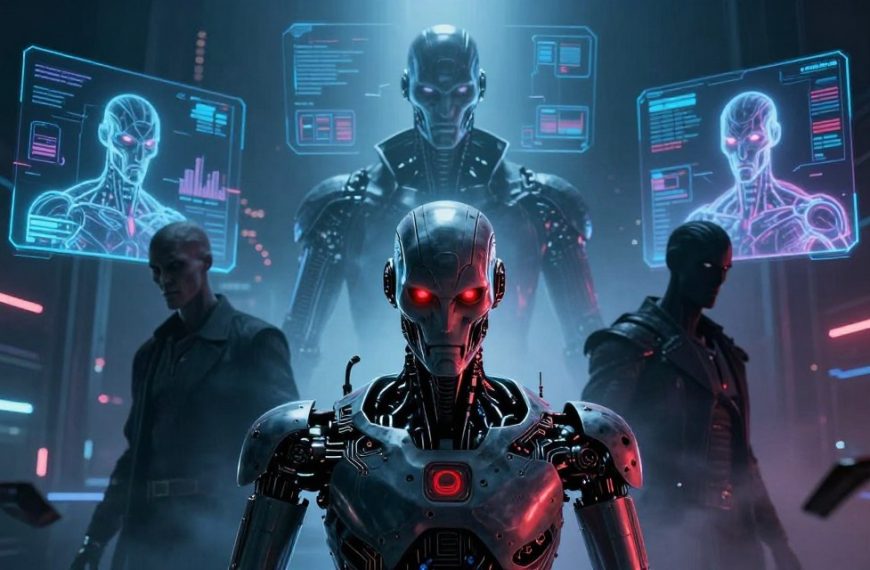
Now, a new force of fear has risen. Artificial intelligence has become the main source of terror. It makes games feel more real and personal.
The Resident Evil series shows this change well. It has grown from simple survival games to complex, AI-driven horrors.
The same fears have long driven evil AI movies, where rogue intelligence turns technology into the source of terror.
Today’s games use smart algorithms to understand players. Enemies get smarter, environments change, and threats seem real.
This article will look at how horror games have changed. We’ll see how they’ve moved from simple to complex, AI-driven scares.
We’ll dive into the tech behind these new fears. And we’ll talk about how these systems affect player experience and fear.
The Genesis of Game AI: From Pac-Man to Survival Horror
Before survival horror games used AI for fear, early games had simple rules. The 1970s and 1980s arcade era laid the groundwork for game AI. It aimed to create a challenge that players could learn and beat.
This method worked well for puzzle and action games. Players could master them by learning patterns.
But survival horror was different. It needed unpredictable threats and a sense of being hunted. This was a big challenge for game AI.
Early Deterministic Systems and Their Limitations
Pac-Man from 1980 is a classic example of early AI. The ghosts followed set patterns, not reacting to the player. Players could learn these patterns to get high scores.
Many games followed this rule-based approach. Enemies in Space Invaders moved in a predictable way. Bosses in early games had fixed attack phases. This meant the AI’s response was always the same, given the same input.
This approach had big limitations:
- Predictability: Once players learned the AI’s patterns, the game became easy. There was no challenge left.
- Lack of True Adaptability: The AI couldn’t change based on the player’s skill. It offered a fixed experience.
- Absence of Emergence: The AI couldn’t create new situations. This made the game less replayable.
For survival horror, these limits were major problems. The genre needs the unknown and unpredictable. A zombie that always moves left or a monster that attacks on a timer is not scary. It becomes a predictable puzzle.
The table below shows how early AI differed from what survival horror needed:
| Aspect | Early Game AI (e.g., Pac-Man) | Survival Horror Requirement |
|---|---|---|
| Core Driver | Pre-programmed rules & patterns | Reactivity to player behaviour |
| Player Experience | Mastery through memorisation | Persistent anxiety and unpredictability |
| Adaptability | None; static challenge | Dynamic difficulty and emergent threats |
| Design Goal | Fair, learnable obstacle | Living, breathing, and hostile world |
This mismatch was a big challenge for developers. They wanted to create a scary game. They needed to move beyond simple rules. The quest for a survival horror AI that could be smart and scary was a major push for game AI. This set the stage for series like Resident Evil.
Resident Evil AI: A Case Study in Evolution
The Resident Evil series shows how AI has changed from simple to complex. This change shows the gaming world’s push for more exciting challenges. It shows how adaptive game AI grew from a dream to a must-have in horror games.
The Original Zombie: Simple Triggers and Iconic Terror
The 1996 Resident Evil scared us with its simple AI. Zombies were not smart; they were just obstacles. Their fear came from their numbers and the tight spaces, not from being clever.
Audio Cues and Limited Sensory Fields
The early games used simple sounds to trigger zombies. They could only see a small area in front of them. This made sneaking past or distracting them a key strategy. It was simple but scary.
| Aspect | Original Zombie AI (Circa 1996) | Dynamic Antagonist AI (Modern Philosophy) |
|---|---|---|
| Primary Driver | Pre-scripted triggers & proximity | Real-time player tracking & adaptive game ai |
| Sensory Input | Basic audio/limited visual cones | Complex environmental awareness (sound, sight, “last known position”) |
| Behaviour Pattern | Fixed, looped animations & patrols | Dynamic behaviour trees with multiple possible states |
| Player Impact | Localised reaction to immediate stimulus | Strategic adaptation to player’s overall style and resources |
The Leap to Dynamic Antagonists: A New Breed of Fear
The series changed with the introduction of relentless pursuers like Nemesis. Figures like Mr. X in the Resident Evil 2 remake took it further. These enemies could track players, making areas unsafe again.
The goal shifted from creating a scary encounter to crafting an intelligent pressure system that learns and reacts.
This change made the game world more tense. Players couldn’t rely on remembering enemy spots. The fear became constant, not just in set moments. This shift mirrors the industry’s move towards AI that creates unique stories.
Today, players expect smarter enemies. The success of these AI systems shows that real horror comes from unpredictable, adaptive intelligence. This is the new fear.
Deconstructing the Resident Evil AI Engine
Underneath the terror of zombies and Tyrants lies a complex code. This code is the heart of fear in Resident Evil. It’s not just simple triggers anymore. Today, a dual-layered AI system orchestrates the horror.
This system has two parts. One controls the world, and the other controls the creatures. It’s all about making the game scary for you.
The Director AI: An Unseen Puppeteer
The Director AI was first seen in Resident Evil 4. It’s been improved in later games. It’s like an invisible guide, making sure the game is just right.
It adjusts the game as you play. It looks at how you’re doing and what you have. This keeps the game exciting but not too hard.
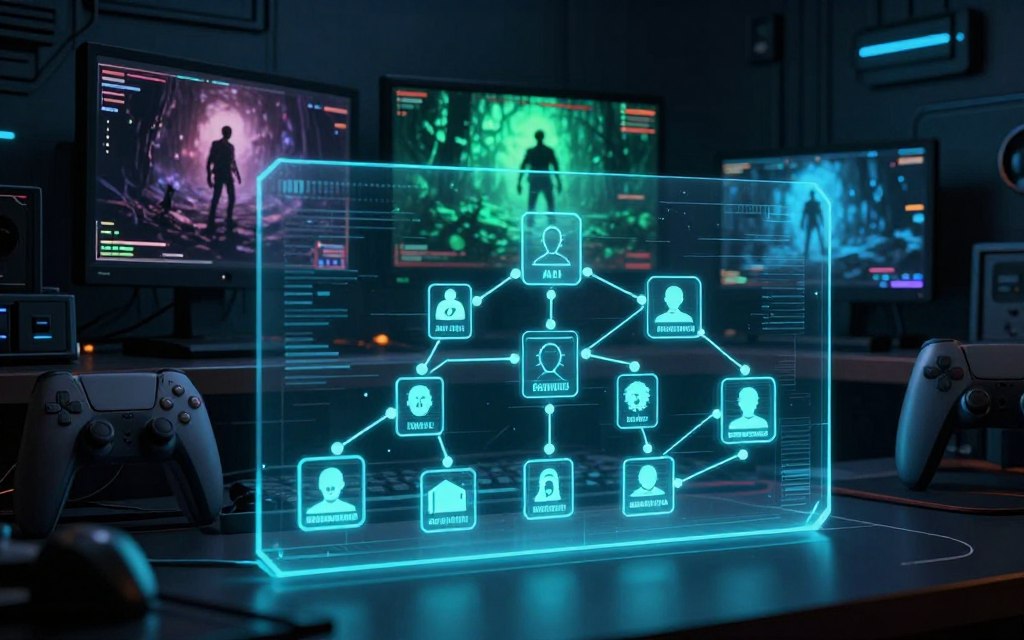
The Director’s work is subtle but deep. It doesn’t just set up events. It makes the game feel real and scary.
It does a few key things:
- Ammunition and Resource Control: If you’re low on health or ammo, it might give you more. But if you have plenty, it might not give you as much.
- Dynamic Enemy Placement: Enemies can appear in different places. This makes the game harder to memorize and keeps you on your toes.
- Pacing and Intensity Modulation: It knows when to slow down or speed up. After a tough fight, it might give you a break. If it’s been quiet for too long, it might startle you.
This idea shows that
“technology should serve the experience—not the other way around.”
The Director isn’t trying to show off. It’s making your horror story special.
Adaptive Behaviour Trees and State Machines
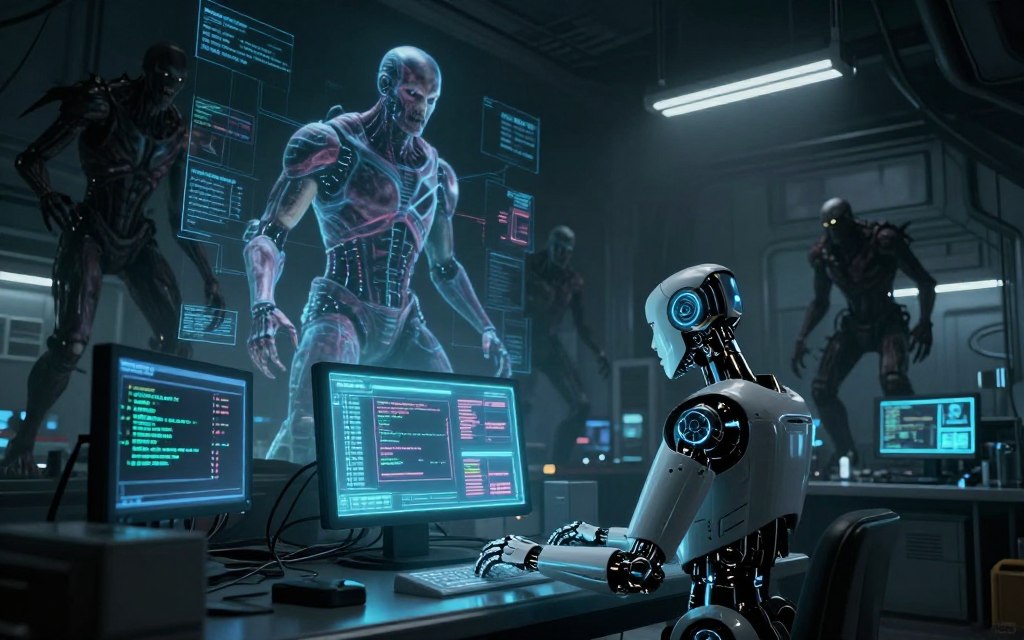
While the Director sets the scene, the real scares come from the enemies. They’re controlled by behaviour trees and state machines. These systems make enemies seem smart.
A behaviour tree is like a flowchart. It lets enemies decide what to do next based on what they see and hear.
How Enemies Decide to Attack, Patrol, or Pursue
Enemies like the Molded in Resident Evil 7 or Lycans in Resident Evil Village have their own ways of acting. They go through different states:
- Patrol/Idle: They move around or stand guard. They use their senses to find you.
- Alert/Investigate: If they hear something or see you, they get more active. They search for you more.
- Pursue/Combat: When they find you, they attack. Their behaviour tree decides how to attack, based on what you do.
The Director and the behaviour trees work together. The Director keeps the game exciting, and the trees make the enemies seem real and scary.
The Nemesis Programme: Creating an Unscripted Pursuer
Resident Evil 3’s Nemesis programme marked a big step in horror games. It moved from scripted scares to procedural terror. This monster was not just a jump scare in a hallway. It was designed to hunt Jill Valentine everywhere in Raccoon City.
Players always felt like they were in danger. The Nemesis made the game unpredictable. It changed the rules of the game on the fly.
Beyond Pre-Placed Encounters: Real-Time Tracking
Old survival horror games had enemies in set places. Players could learn safe paths and prepare for enemies. But Nemesis changed the game.
His AI tracked Jill in real time. He could go through doors and follow Jill into new areas. This made the game feel alive and scary.
This tracking was a big achievement. It made the game more unpredictable and scary. Players had to think on their feet and stay alert.
Adapting Weaponry and Tactics to Player Strategy
The Nemesis was smart. He adapted his attacks based on the player’s moves. This made each fight unique and challenging.
His attacks changed based on the situation:
- Tentacle Assaults: Close up, he used his tentacles for a close-range attack.
- Rocket Launcher Barrages: At a distance, he used rockets to keep Jill on the move.
- Flamethrower Tactics: He used a flamethrower to control areas and deny the player space.
Player choices affected the Nemesis’s actions. Staying in one place could lead to trouble. This made the Nemesis more than just an enemy. He was a dynamic challenge in procedural horror.
The Tyrant’s Footsteps: Mr. X and the Psychology of Pressure
Capcom’s Resident Evil 2 remake is a masterpiece. It doesn’t just have a smarter enemy. It makes you feel like you’re always being chased. Mr. X, the Tyrant, brings a unique kind of fear.
His design is a lesson in enemy AI intelligence. It uses atmosphere and psychology as much as his strength. This makes him a terrifying foe.

Generating the Illusion of Intelligence and Presence
Mr. X’s power comes from his constant presence. He roams the Raccoon City Police Department’s halls. His AI tracks your location using pathfinding and sound.
This enemy AI intelligence is an illusion. He doesn’t learn like modern AI. Instead, his actions are based on simple rules and knowing where you were last.
The real magic is in the level design. The station’s narrow corridors and few safe spots make his search intense. It’s a game of cat and mouse that keeps you on edge.
His presence makes you feel like you’re always in danger. You’re never really safe, just out of sight for a moment. This makes every action a high-risk move.
Integrating Audio Design with AI Decision Loops
The fear Mr. X inspires is heightened by his audio cues. His thunderous footsteps are more than just a sound. They tell you how close he is and what he’s doing.
A distant thud means he’s searching. A sudden stop and creak mean he’s coming for you. The silence after a close call makes you even more anxious. This mix of sound and enemy AI intelligence creates a cycle of fear.
The sound becomes your main tool for survival, but it also fuels your fear. You’re not just listening for him; you’re tuning into his artificial mind.
Actions like him bursting through walls or doors are tied to his state. These events feel dynamic because they’re triggered by his relentless pursuit. This makes the world feel alive and hostile.
The brilliance of Mr. X’s enemy AI intelligence is in its simplicity. It shows that true horror comes from what’s in your mind. Simple rules and clever design can create a world of fear.
Beyond Raccoon City: AI Innovations in Modern Horror Games
The impact of Resident Evil is huge, but game makers have moved beyond Raccoon City. They use AI to make games more than just about enemies. They focus on creating a scary atmosphere, not just jump scares.
AI helps control the game’s tension and tells stories through the environment. This makes the fear feel real and personal. It’s a new way to scare players.
Alien: Isolation’s Xenomorph: A Masterclass in Unpredictability
Alien: Isolation made a digital creature as smart and scary as the movie one. Its AI is special. It has two parts: one for big plans and one for quick actions.
The Two-Tiered AI System: Macro and Micro Decisions
The ‘Director’ AI makes big decisions, like where the Xenomorph goes. The ‘Behavioural’ AI handles small things, like searching for you. This makes the Xenomorph seem real and unpredictable.
The creature learns from you but doesn’t follow a pattern. This makes every encounter scary and different.
Amnesia and the Sanity Mechanic: AI that Reacts to Mental State
Amnesia: The Dark Descent introduced a new idea: enemies that react to your fear. Your sanity affects the game and AI. As you see scary things, the world gets darker and monsters get angrier.
This creates a loop where the AI reacts to your fear. It makes the game feel more real and scary. The fear is inside you, making it hard to escape.
Asymmetrical Horror: The AI Director in Left 4 Dead and Back 4 Blood
Turtle Rock Studios changed horror games with their director ai system. This AI changes the game’s pace and difficulty. It watches how you play and adjusts.
If you’re doing well, it might make things harder. If you’re struggling, it might give you a break. This makes every game different, keeping it fresh and scary.
These new ideas show AI’s power in horror games. They create a unique and scary experience. AI is not just for fighting; it’s for building a scary world.
Procedural Generation and the AI-Crafted Haunted House
Imagine going back to the Spencer Mansion, but it’s different. The corridors and horrors are in new places. This is what AI-driven procedural generation offers. It changes the game by making environments feel new and scary every time you play.
This change from fixed levels to dynamic ones meets a player’s wish for more open but controlled exploration. Players want to discover freely but within a framework that keeps the game tense. Procedural generation, with its complex rules, makes this balance possible.
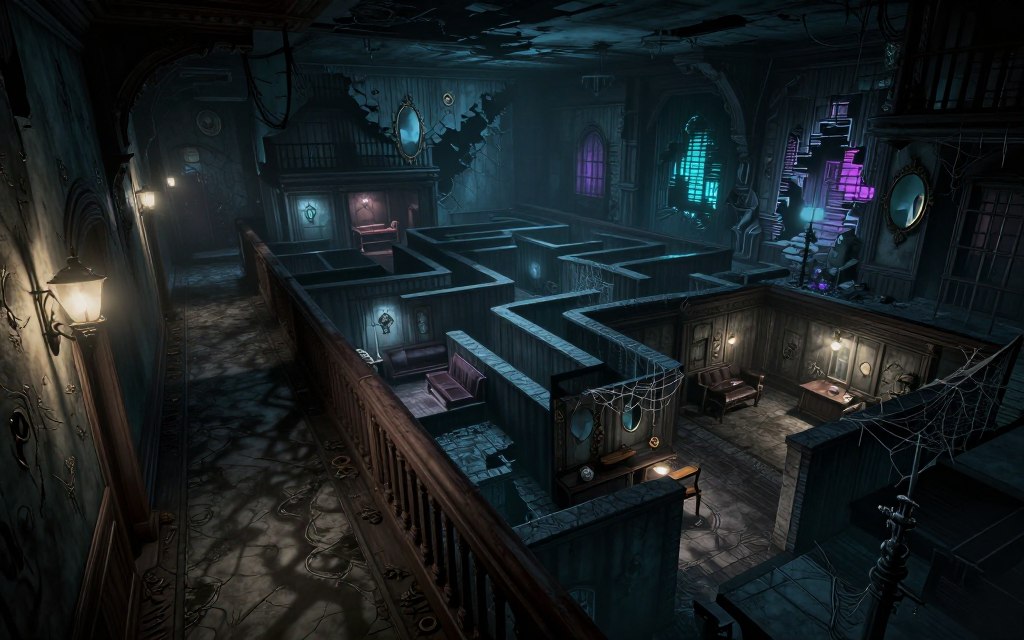
Replaying the Spencer Mansion: Algorithmic Layout Generation
The idea is exciting for classic survival horror. What if the mansion’s east wing was first, or the shotgun was in a different room? Algorithmic layout generation uses rules and assets to create a game space. Key rooms are fixed, but hallways, item placements, and puzzles can change.
This method turns a linear game into a modular one. The AI doesn’t start from scratch; it uses a set of validated components. This way, the game keeps its pace and flow, but each play is different.
Balancing Recognisable Landmarks with Fresh Terror
The art is in mixing iconic locations with new surprises. The main hall or critical labs must stay the same. But the path to them, enemies, and resources can change.
This creates a powerful effect. Players feel secure around landmarks, making new areas more shocking. It offers a sense of controlled openness—you know the big places, but the journey is always new.
The Rise of the Horror Roguelike: Infinite, Unlearnable Challenges
The horror roguelike genre shows this idea at its best. Games like Darkwood or The Binding of Isaac have unique maps for each play. The AI makes sure you can’t memorise patterns.
Every play is a real fight for survival in an unknown world. There’s no safe route or best item spot. This creates a deep, lasting fear, as mastering the game is impossible. Players adapt to new scenarios, making the experience more personal and scary.
The engines behind these machine learning games use complex algorithms for variety and playability. They show a future where horror is not scripted but grown—a haunted house that changes for every visitor, keeping fear fresh.
The Technical Sorcery: Machine Learning and Neural Networks
Generative AI gets a lot of attention for making text and images. But, it faces special challenges in game AI. For example, games like Resident Evil need careful pacing and scares. Generative systems can mess with this.
Machine learning and neural networks are being used in a new way. They’re not just for making content. They help games understand and react to players in real-time. The aim is to create a dynamic pacing AI that knows what scares you.
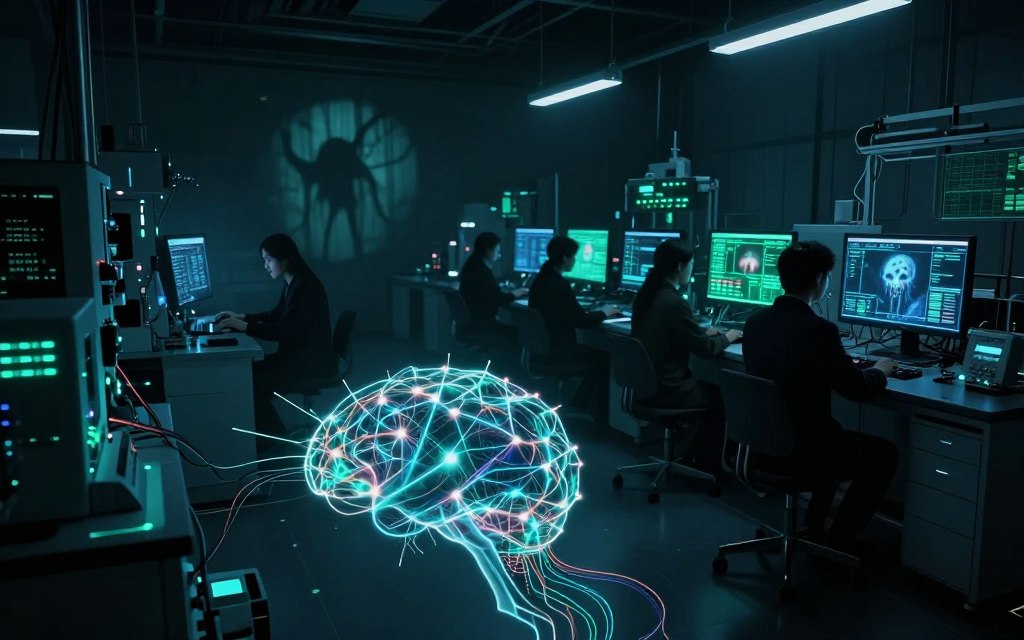
Training AI on Player Behaviour: Learning to Induce Fear
Traditional game AI follows set rules. Machine learning offers a new approach. It lets AI study player behaviour.
By looking at playtest data, AI can learn what scares you. It’s not about random events. It’s about using that knowledge to create tension.
This could make horror games more personal. The AI could adjust the game to keep you scared. It’s not just about jump scares anymore.
Ethical Use of Playtesting Data
Using player data raises big ethical questions. Players need to know what data is being collected. They must understand how it’s used and who has it.
Developers must be careful. They need to make sure the AI doesn’t cross any lines. The data must be kept safe and private.
Procedural Animation: Making Every Movement Feel Threatening
Machine learning is changing how enemies move. Procedural animation creates unique movements in real-time. This makes every action feel unpredictable and scary.
This method makes it hard to learn safe patterns. Enemies might change how they move each time. This AI-driven animation keeps you on edge.
The table below shows how machine learning changes game AI:
| Aspect | Traditional Game AI | Machine Learning AI |
|---|---|---|
| Decision Logic | Rule-based state machines; finite behaviour trees. | Neural networks that adapt based on player data inputs. |
| Pacing Control | Pre-scripted event timers and triggers. | Dynamic pacing adjusted by real-time analysis of player state. |
| Animation System | Hand-crafted animation cycles; predictable transitions. | Procedural animation generating unique, non-repeating movements. |
| Personalisation | Limited; same challenges for all players. | High; AI tailors threats to individual player reactions. |
| Development Focus | Designer control and predictable debugging. | Curating training data and managing ethical data use. |
These technologies are new in horror games. They’re not yet widely used. The future is in combining these with careful game design. This could lead to a new level of fear in games.
The Player’s Experience: Immersion, Agency, and Unprecedented Terror
Advanced artificial intelligence in horror games changes the game. It turns the player’s journey into a deep, psychological challenge. The core of modern horror game immersion is about breaking away from predictable mechanics.
This forces players to respond in a raw, personal way. AI turns players from puzzle-solvers into survivors. It creates an experience where terror is real, choices matter, and fear builds up in a unique way.
The Eradication of Pattern Memorisation
For years, players used pattern memorisation to survive in horror games. They learned enemy routes and safe spots. But this method was based on repetition, not real adaptation.
Now, AI changes this. Enemies don’t follow the same patterns. A zombie might attack in a way you least expect, based on your actions. This makes the game unpredictable.
Players can’t just memorise levels to stay safe. They must stay alert and think on their feet. This makes the game truly immersive, creating a constant sense of uncertainty.
Meaningful Choice and Consequence in Survival
AI makes every decision count in horror games. The idea that “fewer bullets equal more fear” is taken to a new level. An AI Director controls the game, making sure every choice has an impact.
This leads to choices with real consequences:
- Fight or Flight: Fighting a smart enemy risks your ammo. Running away might save your bullets but could lead to more danger later.
- Resource Management: Should you use your last healing item now or risk going further? AI adjusts item drops based on your health, making this a tough decision.
- Route Planning: Choosing a path is a gamble. A longer route might have more resources but also more danger from enemies.
This adds a layer of strategy to the game. It makes survival feel earned, based on the player’s decisions.
Modelling Dread: AI that Understands Pacing and Tension
The best AI in horror games is like a masterful storyteller. It uses data to control the game’s pace and tension. This AI, called the Director AI, is not just about making the game harder. It’s about creating a psychological experience.
This AI looks at how fast you play, how long you stay in areas, and how much ammo you have. It uses this info to create a unique horror experience. After a tough fight, it might make the game quieter, letting tension build again.
AI understands how to pace the game, making it feel personal. It avoids making the game too fast, building up to scares. The horror becomes psychological, playing on anticipation and the fear of the unknown, not just on shock. This is the peak of horror game immersion, making the game feel like it’s responding to the player’s own fears.
Challenges on the Horizon: Balancing AI and Ethical Design
Exploring new heights with AI in games brings many challenges. It makes us think deeply about game design and player safety. We must find a way to make horror games smarter without crossing ethical lines.
The Fine Line Between Challenging and Punishing
Making an AI that’s smart but fair is a big challenge. If it’s too good, it can make the game too hard and unfun. We aim for a game that’s exciting and full of surprises, not one that’s always one step ahead.
This balance is key to ethical game AI design. We need to make sure the monster can lose too. This makes the game feel real and winnable. It turns the game into a thrilling chase where strategy counts.
| AI Behaviour | Player Perception (Challenging) | Player Perception (Punishing) |
|---|---|---|
| Adaptive Difficulty | The game responds to my skill, keeping tension high. | The game is cheating, making enemies sponges after I play well. |
| Unpredictable Patrols | I can’t memorise routes; I must stay alert. | My progress is blocked by random, unavoidable encounters. |
| Resource Management Interference | The AI forces me to make tough choices about ammo and health. | The AI systematically destroys my supplies, making progression impossible. |
The Uncanny Valley as a Horror Tool
Horror games use the uncanny valley to scare us. This is when something looks almost human but not quite. Neural network animation makes this effect even more real.
This tech creates enemies that are unsettling. Their movements might seem too perfect or their reactions off. This creates a deep fear that scripted animations can’t match.
Privacy, Data Collection, and the Future of Personalised Fear
Data collection is a big issue. AI promises to make games more personal. Imagine a game that knows your fears and uses them against you. But this raises big ethical questions.
What data is being collected? How is it used? The industry is cautious about this. There’s a fear that it could harm player privacy.
“The drive for personalised horror must not become a licence for pervasive surveillance within the game space. Player trust is a resource more precious than any algorithm.”
To move forward, we need clear rules about data use. The future of ethical game AI in horror depends on how we respect player privacy.
Conclusion
The shift from fixed patrols to adaptive systems is key. Artificial intelligence has grown from simple scripts to the heart of the genre.
This advanced AI controls pacing, tension, and resource use. It makes each experience unique to the player’s actions. Games like Alien: Isolation show its power.
Now, players face real uncertainty. Every decision matters, from hiding to saving bullets. Left 4 Dead’s AI Director makes each playthrough different.
AI will keep horror games exciting and scary. It learns and adapts, keeping our fears fresh. The future of horror is all about unpredictability.
The best horror now comes from feeling hunted by smart AI. This tech ensures the genre will stay as chilling as ever.

 By
By