
The world of digital media is changing quietly. Now, anyone can make speech sound incredibly real with just a few clicks. This new tech is changing how creators work, but it also raises big concerns about misuse.
For a darker voice-tech example, see Evil Larry AI Voice.
Take Fish Audio’s ‘Evil Empire’ for example. It can create sounds from the scary “Evil empire running these streets…” to fun cartoon voices. It’s designed for videos, audiobooks, and social media, showing how easy it is to use today’s AI voice generator and synthetic voice tech.
One of the clearest examples is Evil Larry AI Voice, which shows how a single character voice can become a viral hook.
This tech is both a creative tool and a powerful tool for harm. It can tell a story or sound just like someone else, making fake audio seem real. This makes the ‘Dark Voice Tech’ sector grow fast.
The companies making these tools are becoming huge online powers. They’re not just companies; they’re digital empires. They shape how we hear and trust audio online, making us question what’s real and what’s not in our digital world.
The New Frontier: Understanding the “Evil Empire” in Audio
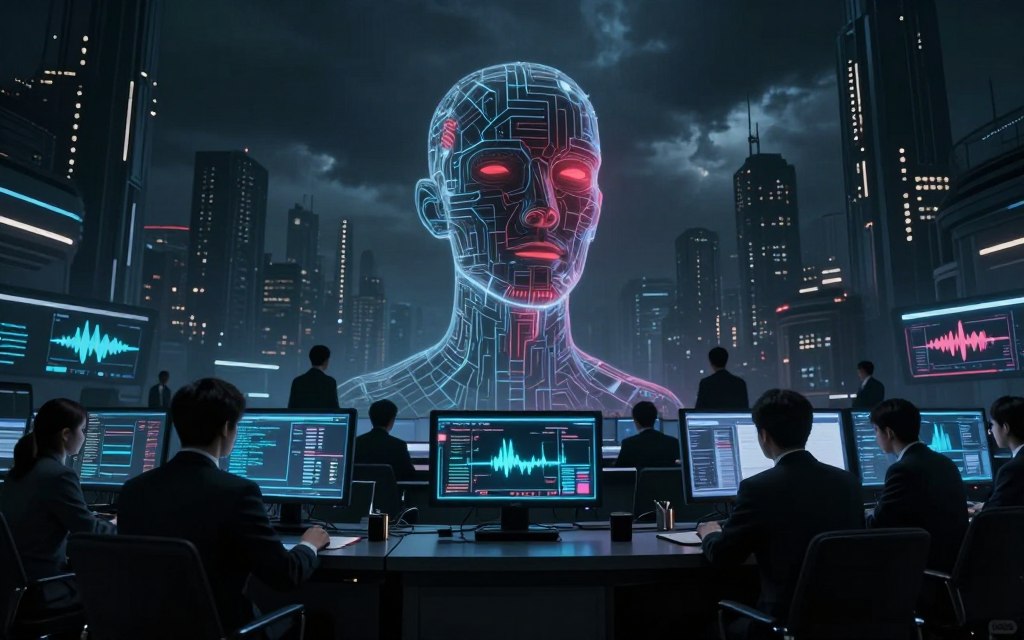
Voice AI has grown fast, showing a new, scary side. Now, making human-like speech is mainly in the hands of a few big companies. They are seen as an ‘evil empire’ in audio, changing how we make and listen to sounds.
This empire is based on data, algorithms, and money. It uses human voices as its main resource. Tech giants say they want to connect and make things easier. But, their systems also support a shadowy world of lies.
What Constitutes “Dark Voice Tech”?
Dark voice tech is voice AI used for bad things. It’s a part of a bigger field. It’s used for scams, spreading false information, and stealing identities.
It’s about making fake voices without permission. The aim is to trick people for money or to influence them. This is a serious issue.
There’s been a rise in voice-cloning scams. Scammers use small voice clips to pretend to be family members in trouble. This shows how dark voice tech is used to harm people. It’s more than just changing sounds; it’s a personal attack.
From Assistive Tool to Weapon of Manipulation
Things have changed a lot. Tools meant to help are now used for harm. It’s easy to turn a tool for making audiobooks into something fake.
This is like the ‘Empire of AI’ idea. Big companies have all the best brains and computers. They do many things, including making technology that can be used for bad purposes.
This has damaged our trust in sounds. The empire uses our voices to grow stronger. It controls who can sound like who, creating a big imbalance.
The move from helping tool to harmful tool shows a big AI ethics problem. Without rules, technology can hurt more than it helps. Now, it’s not just what voice AI can do, but who decides how it’s used.
How “Evil Empire Voice AI” Actually Works
To understand Evil Empire Voice AI, we need to look at two main parts. The first is the artificial intelligence engine that creates the synthetic voice. The second is how easy it is for people to use these tools.
The Engine Room: Deep Learning and Neural Networks
At the heart of voice cloning is deep learning. This uses neural networks to learn from lots of data. These networks are trained to understand a human voice.
Data Harvesting: Building the Vocal Library
The process starts with collecting data. To clone a voice, the AI needs audio samples. Malicious actors often get this by scraping public sources.
This is like building a digital vocal library. The quality and amount of samples matter. Just a few minutes of clear audio can create a convincing model. This step is like the start of many scams, where a target’s voice is taken without their knowledge.
Model Training: Forging the Synthetic Voice
After collecting audio, the real deep learning magic starts. The neural network breaks down the voice into its parts. It learns the speaker’s sound units, pitch, rhythm, and emotional tone.
The AI then uses this information to create new speech. The final product is a synthetic voice that can say anything, just like the original. This is the powerful tool in the digital world.
Gateways to Misuse: Accessible Platforms and Tools
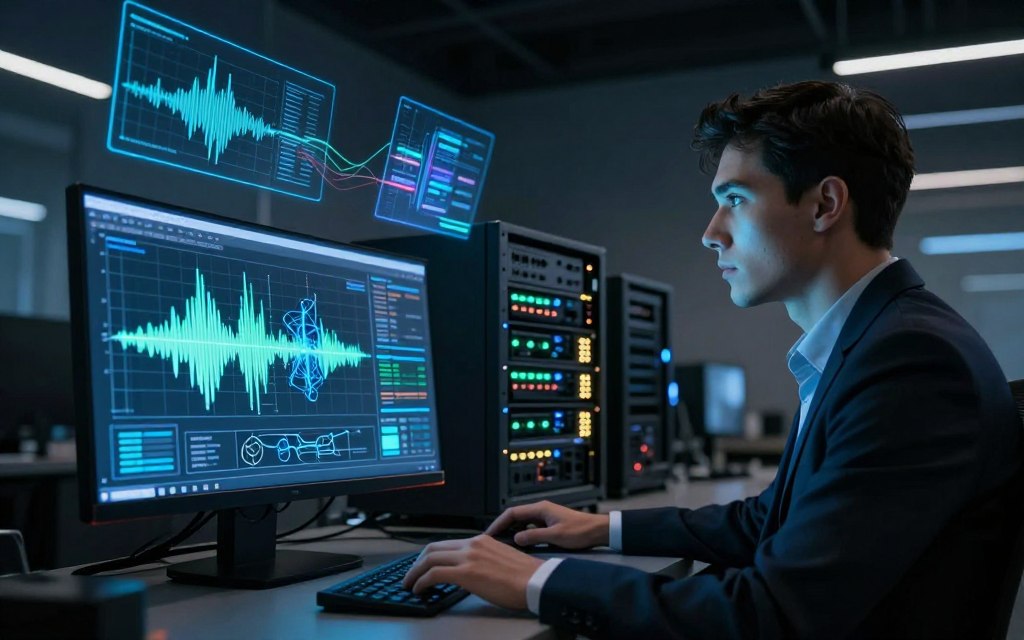
This technology wouldn’t be a big threat if it stayed in labs. But it’s now available to anyone with internet. Many platforms make it easy to use voice cloning tools.
These services are easy to use and often free. For more use, you can pay a small monthly fee. This makes it easy for misuse to happen.
Examples: ElevenLabs, Resemble AI and Open-Source Models
Platforms like ElevenLabs and Resemble AI are known for their realistic speech synthesis. They make it easy to create convincing audio.
The open-source community also offers powerful models. These can be run locally, making it even easier to create convincing audio deepfakes. With simple online tools, anyone can make a convincing fake voice.
The spread of AI voice technology has made it easy for anyone to use. This has blurred the line between creative tool and weapon.
The mix of advanced neural networks and easy access is what makes the “Evil Empire” so powerful. Understanding this is key to seeing the challenge it poses.
The Arsenal of Deception: Malicious Content Creation
Malicious actors are now using AI-generated voices to create new threats. These threats range from political sabotage to corporate fraud. This technology lets them create fake audio stories to deceive and steal on a large scale. We will look at how this dark arsenal is used.
Weaponised Disinformation and Propaganda
Synthetic voices are great for spreading false information. They sound like real voices, which makes people less likely to doubt them. This is used to create stories that make groups seem against each other. It’s a way to change how people see things and break social bonds.
Crafting Fake News with Authoritative Tone
Imagine hearing a news report from a trusted anchor, but it’s all made up. It could be about a fake financial crisis or a false terrorist threat. The way it sounds makes it seem real, spreading disinformation fast. This can hurt the trust in real news.
Political Deepfakes and Fabricated Endorsements
Political deepfakes are now just audio. A fake voice of a candidate can say anything, like admitting to a crime or insulting people. These fake statements can change how people vote and upset the democratic process.
The use of synthetic media to create divisive stories is a direct attack on democracy’s information base.
Advanced Phishing and Social Engineering
Voice cloning has changed scamming. Old email phishing tricks don’t work as well anymore. But a call from a fake voice of someone you know can be very scary.
This social engineering is very personal and scary. For example, a finance director might get a call from what sounds like their CEO. The CEO wants them to send money to a new supplier for a secret deal. Everything sounds right.
- The $220,000 Heist: Criminals used AI to clone a company director’s voice. They told a manager to send €220,000 for a deal. The manager did it.
- The $25 Million Attempt: Fraudsters pretended to be a senior executive at a UK energy firm. They almost got a CEO to send $25 million.
These are real cases where fake voices were used to steal money.
Corporate Sabotage and Fraudulent Communications
Voice-based phishing is also used for corporate attacks. Fake audio instructions can cause trouble, steal ideas, or harm a rival’s reputation.
Imagine a fake urgent voicemail from IT telling an employee to disable security. Or a fake call from a partner’s lawyer cancelling a big contract. The damage is huge.
Impersonating government officials is also a big threat. A scammer can sound like a tax authority or a regulator. They demand money or personal info, using fear to get what they want.
The table below shows these threats and their effects:
| Threat Vector | Primary Method | Example Impact |
|---|---|---|
| Weaponised Disinformation | Fake news bulletins with cloned authoritative voices | Public panic, erosion of institutional trust |
| Political Audio Deepfakes | Fabricated candidate speeches or endorsements | Election interference, damaged reputations |
| Voice Phishing (Vishing) | Cloned voices of executives in urgent financial calls | Direct financial theft (e.g., $220k fraud case) |
| Corporate Sabotage | Fraudulent operational instructions via audio | Operational disruption, data breaches |
This shows that dark voice tech is a real threat today. It’s used by those who want to deceive for power, money, or chaos.
Identity Theft in the Vocal Dimension
Imagine getting a call from a loved one, only to find it’s a fake. This is what happens in identity theft. Your voice, unique to you, can be copied and used to harm others. This voice fraud hurts both emotionally and financially, affecting our deepest connections.
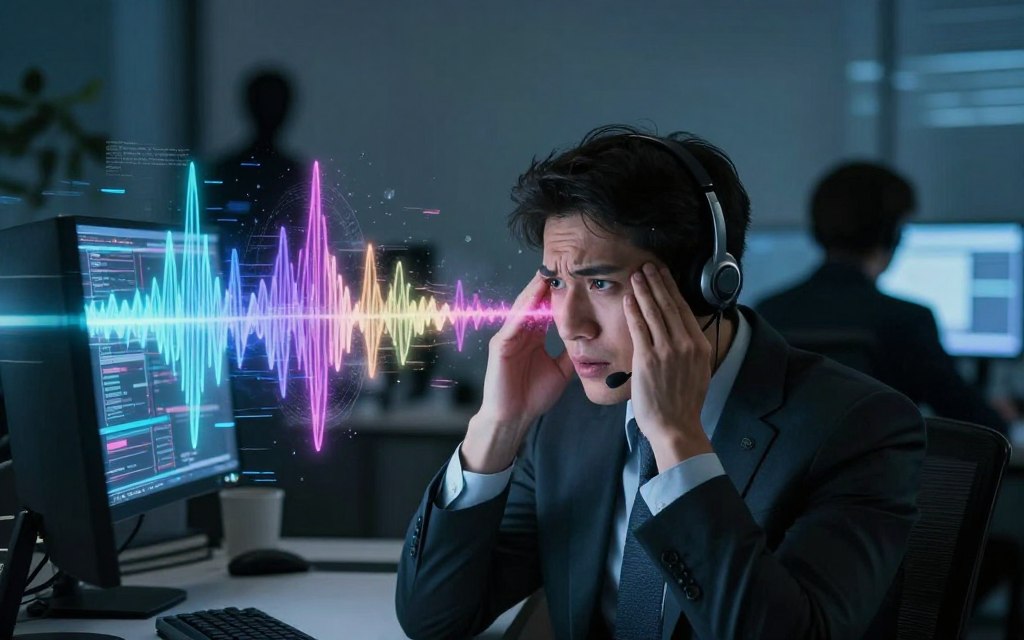
Sharon Brightwell’s story is chilling. She thought it was her daughter, crying about a car accident. The fake voice, made from just a few clips, tricked her into sending money. This personalised scam uses our love and trust against us, making us vulnerable before we even know what’s happening.
Personalised Scams: Cloning Family and Friends
Criminals use AI to make “family emergency” scams. They can sound just like your family members. It’s easy:
- Data Harvesting: They take short voice clips from social media or voicemails.
- Model Training: They use online tools to create a fake voice.
- Script Delivery: They make a message that sounds real and urgent.
This voice fraud is scary because it tricks us into trusting. Our brains are wired to believe a voice we know, making us easy targets.
Celebrity and Public Figure Impersonation
While personalised scams target people, celebrities are also at risk. AI can mimic famous voices, like cartoon characters, very well.
AI can make a character’s voice sound real, showing no voice is safe from being copied.
This tech is used for fake endorsements, scams, or spreading lies. A fake CEO voice could change stock prices. A fake politician’s voice could ruin their reputation. The damage to trust in media and public talks is huge.
The Challenge of Protecting a Vocal Identity
Keeping your voice safe is hard. Unlike passwords, your voice is public. We share it in conversations and online.
Once a good fake voice is made, it can be used many times. There’s little you can do to “reset” your voice. Laws and systems can’t keep up with this new threat of identity theft.
There are a few things you can do to protect yourself:
- Audio Awareness: Be careful about what you share online. Don’t share too much clear voice audio.
- Verification Protocols: Use a family code word or a second check for urgent calls.
- Public Pressure: Push for stricter rules on voice cloning tools online.
The big question is: how do we prove our voice is real? Finding a solution is key to stopping voice fraud from spreading.
The Corrosion of Auditory Trust
Dark voice tech is more than just scams. It threatens our trust in all audio information. This loss of trust affects how we communicate and function as a society. If we can’t trust what we hear, our ability to share truth and justice starts to break down.
This damage goes beyond personal fraud. It harms democracy and how we find reliable information.
Undermining Audio Journalism and Eyewitness Accounts
Audio journalism and eyewitness accounts are key to factual reporting. But voice cloning technology now puts them at risk. A fake quote or manipulated call can spread quickly.
This makes it hard to find the truth. Reporters face more doubt, and fake evidence can spread easily. The public’s ability to tell fact from fiction weakens, hurting democracy.
The damage to digital trust in media is deep and lasting.
The Legal System’s Dilemma with Audio Evidence
For years, voice recordings have been key evidence in courts. But dark voice tech makes them unreliable. Now, both sides can question the authenticity of recordings.
This creates a big problem for the legal system. Verifying audio evidence needs to change fast. It requires expensive forensic tests that not everyone can afford. The “beyond a reasonable doubt” standard is harder to meet when recordings can be fake.
This crisis of trust slows down justice and makes it harder to find the truth.
Societal Impact: The Dawn of Universal Scepticism
The end result is universal scepticism. If everything we hear could be fake, society becomes defensive. Communication, which holds us together, becomes strained.
This scepticism leads to a world where only certain sources are trusted. People may only believe information from those they see as authoritative. Or, they might trust nothing, leading to apathy and disengagement. This loss of shared reality is a major threat from the evil empire in AI.
To rebuild digital trust, we need to work together. Technology, law, and media literacy must all play a part. Without this effort, we risk living in a world where hearing is not believing.
Navigating the Ethical Quagmire
The rise of voice cloning technology brings up big ethical questions. Laws are struggling to keep up. Questions about rights, ownership, and morality are hard to answer.
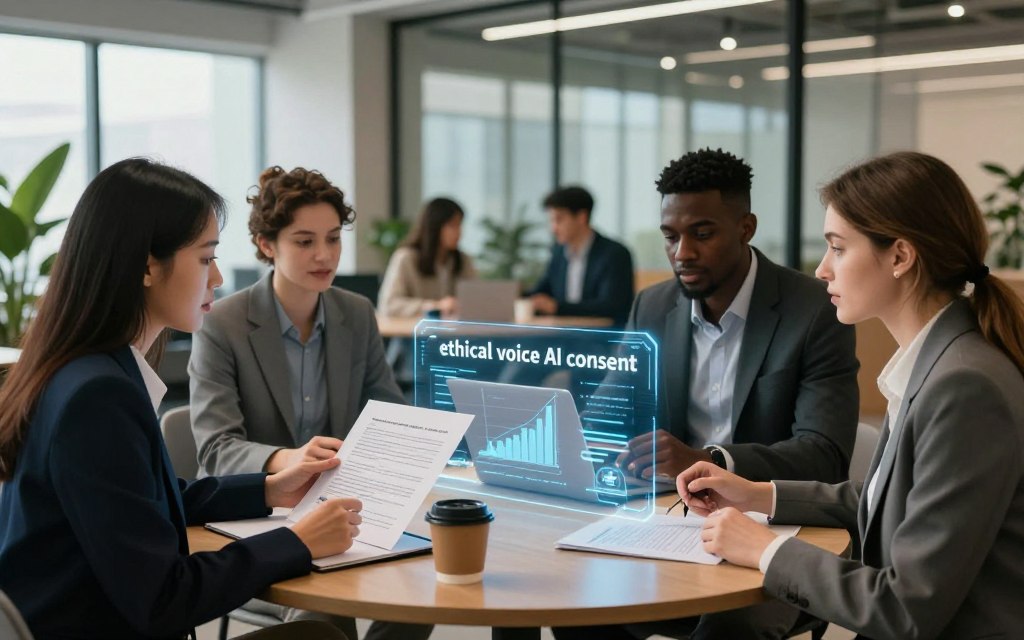
The Fundamental Issue of Consent
The main problem is consent. Cloning someone’s voice without their say-so is a big violation. It treats a person’s voice like data to be used for harm.
Does someone own their voice in today’s digital world? Dr. Anya Petrova puts it simply:
“Voice is not just sound; it’s a biometric identifier, a carrier of emotion, and a core part of self. Cloning it without permission is like stealing a piece of someone’s identity.”
Laws often don’t catch up. They see voice misuse as privacy or fraud issues, not as a direct attack on vocal integrity.
The Morality of Posthumous Voice Recreation
The debate gets even tougher with posthumous voice recreation. Now, we can make voices from old recordings or archives. Is it right to use a dead actor’s voice in a new documentary or a deceased singer’s voice in a new song?
Some say it’s a way to celebrate a person’s legacy and offer comfort. Others see it as disrespecting the dead, using their voice for profit or art without their consent. This is a moral issue without clear legal answers.
Copyright Law in the Age of Synthetic Speech
Copyright law is not ready for synthetic speech. It protects specific recordings or performances, not the voice pattern itself.
Training an AI on a celebrity’s copyrighted work to clone their voice raises questions. Which rights are broken? The process copies copyrighted material, but the final voice is new and non-human. This creates a legal grey area that challenges intellectual property.
Attribution and Accountability for AI-Generated Content
When AI-generated content harms someone, figuring out who’s to blame is hard. Who is responsible in the creation process?
- The Developer: Should the creators of a powerful voice cloning model be liable for its misuse?
- The Platform: Does the service hosting the tool have a duty to prevent harmful applications?
- The End-User: Clearly, the person who prompts the AI to create a fraudulent message bears direct responsibility.
- The Subject: Could the person whose voice was cloned have any duty to protect their vocal data?
Without clear laws for attribution and accountability, bad actors can hide. This lack of deterrence lets scams and disinformation thrive. Finding who’s liable is key to rebuilding trust in what we hear.
Case Studies: Dark Voice Tech in the Wild
Real-world cases show how audio deepfakes are causing harm. These incidents are moving from theory to reality, showing the risks to organisations and individuals.
Political Scandals Fueled by Audio Deepfakes
The political world is a testing ground for synthetic voice manipulation. This technology can make it seem like officials said things they didn’t. It can change public opinion or cause international problems.
The FBI warns about people impersonating government officials with audio deepfakes. This is part of a bigger strategy to spread false information. It aims to shake trust in institutions, which is critical during elections.
A single convincing audio clip can cause big problems. It can lead to market crashes or diplomatic issues before anyone checks if it’s real.
Documented Financial Frauds and Extortion Cases
Dark voice tech is now causing real financial harm. There are clear examples of criminals using it for financial fraud.
In one case, a UK energy firm lost a lot of money. Criminals used a fake voice of a senior to get them to pay out during a call.
Arup, a global engineering firm, lost $25 million. Scammers used a fake voice of a senior to make secret payments. This is not an isolated incident.
This tech is also used for extortion. Fake voices of family members are used in fake kidnapping calls. This is to get money quickly from scared relatives.
Controversies in Media and Entertainment
The creative world is facing big questions about synthetic speech. The ability to mimic voices has caused major debates.
Actors and musicians worry about studios using AI without permission. This could hurt their careers and control over their work. Also, using audio deepfakes in films or documentaries can confuse what’s real and what’s not.
Entertainment samples can be used to harm reputations. This shows the need for clear laws about voice identity and copyright in synthetic media.
Countermeasures: Detection, Legislation, and Resilience
Dark voice tech is a big threat that needs a strong plan. We must detect, regulate, and be resilient. No single method can stop it completely. We need a mix of tech, laws, and public awareness to fight this.
The Technical Fight: Developing Audio Deepfake Detectors
The battle is between making fake voices and finding them. As fake voices get better, experts are making better tools to spot them. These audio deepfake detectors find clues that humans can’t hear.
They look for things like how voices sound and background noises. Tools use AI to learn from lots of data. They aim to check all kinds of communications, from social media to banks.
But, this battle keeps going. Every new way to detect fake voices leads to even better fakes. Finding fake voices fast for everyone is a big challenge. It shows we can’t just rely on tech.
Global Regulatory Responses and Legal Frameworks
World leaders are making laws to stop bad uses. They want to stop harm and punish wrongdoers. In the US, making fake voices in robocalls is now illegal. This lets state lawyers go after scam callers.
The Federal Trade Commission (FTC) is also helping. They’re pushing for better ways to find and stop fake voices. Laws like the European Union’s AI Act want to make sure we know when AI is used.
Without clear laws, fake voices can spread everywhere. This makes us doubt what we hear.
These laws are important steps. They show making fake content is wrong and can get you in trouble. This helps stop the “evil empire” from growing.
Practical Defences for Individuals and Businesses
While laws and tools get better, we can act now. We can all be safer by following simple steps and being careful.
- Establish a Verbal Safe Word: Pick a special word with your family. Use it if you get a strange call asking for money or info.
- Limit Your Digital Voice Footprint: Don’t share voice recordings online. The less you share, the harder it is to make a fake version of you.
- Create a Verification Protocol: If a call seems off from someone you know, hang up and call them back. Use a number you trust.
For Businesses and Organisations:
- Implement Comprehensive Employee Training: Teach staff, like in finance and HR, about voice cloning scams. Teach them how to check things are real.
- Enforce Strict Verification Protocols: For important tasks, like sending money, need extra checks. Use emails or in-person checks.
- Strengthen Digital Security: Use multi-factor authentication to keep systems safe. This means more than just a voice call can get you in.
By following these steps, we can fight back against fake voices. This battle is ongoing, but with good tech, laws, and careful users, we can keep it in check.
Conclusion
Voice AI has changed from a helpful tool to a source of fraud. It now spreads false information and scams. This shift is significant.
The “Evil Empire” isn’t just one group. It’s a big problem where easy-to-use platforms and smart networks lack rules. This makes it hard to trust others and ourselves.
We need to work together to make audio technology safe. We must create strong laws and better ways to find and stop scams.
Keeping us safe needs everyone’s attention. We must stay alert online and offline. Also, those making AI must follow ethical rules.
We aim to keep the voice of humans safe and trustworthy. This will happen if we innovate wisely and stay cautious.


 By
By