


Artificial intelligence is changing how businesses work. It goes beyond just being a buzzword. It’s now a critical, mainstream business tool.
McKinsey’s research shows a big change. All industries plan to invest a lot in AI over the next three years. In fact, 88% of companies use AI in at least one area of their business.
So, what does this mean for businesses today? AI offers a range of technologies. These include machine learning and natural language processing. They help analyse data at an unprecedented scale.
This ability leads to better decision-making and more efficiency. The next sections will look at the real benefits AI brings to businesses.
Beyond the Hype: AI as a Strategic Business Imperative
A Frost & Sullivan survey shows nearly 90% of IT and business leaders see AI as key to their goals. This marks a big change. Now, AI’s importance is backed by solid data, not just dreams.
“Nearly 90% of IT and business decision-makers identified AI as essential to achieving business goals.”
This change is huge. Leaders now focus on how to use AI, not if it will matter. They see AI as more than just a tool. It’s a strategic must for staying ahead and growing.
Gartner’s analysts offer a clear guide. They break AI’s benefits into three areas: Defend, Extend, and Upend. This helps companies see how AI can protect, improve, or revolutionise their business.
The table below shows Gartner’s framework. It shows how AI can meet different business goals and add value.
| Gartner Tier | Strategic Objective | Primary Focus | Common Use Cases | Business Impact |
|---|---|---|---|---|
| Defend | Incremental Improvement | Optimising existing workflows and protecting core business. | Process automation, predictive maintenance, basic fraud detection. | Reduces costs, improves accuracy, and enhances operational reliability. |
| Extend | Moderate Transformation | Modifying and enriching key processes to drive growth. | Personalised customer engagement, dynamic pricing, advanced supply chain analytics. | Unlocks new revenue, improves customer loyalty, and enables smarter AI implementation for scaling. |
| Upend | Radical Transformation | Creating new business models and disrupting industries. | AI-as-a-Service platforms, autonomous product development, entirely new digital services. | Creates dominant market positions, opens untapped revenue streams, and redefines industry standards. |
The “Defend” tier aims for efficiency and risk reduction. It automates tasks and strengthens current operations. This is where many start.
The “Extend” tier is about deeper change. It uses AI to enhance customer interactions and core processes, leading to real growth.
The “Upend” tier is for true leaders. It uses AI to create new products, services, and models that can change an entire industry.
Grasping this framework is key to a solid AI strategy. It shifts the focus from just adopting AI to using it wisely to achieve specific goals. The aim is to use AI to defend, extend, or disrupt the market.
What Are the Business Benefits of Artificial Intelligence? The Core Advantage
Automation gets a lot of attention, but the real benefits of artificial intelligence are more profound. They include efficiency, insight, and growth. McKinsey’s research shows that companies using AI see big cost reductions and better profits. This is because AI does more than just automate tasks.
The main advantage of AI is its strategic framework. It has three key areas that help leaders see where to invest for the best results. This framework is a clear guide for adding value.
Categorising the Impact: Efficiency, Insight, and Growth
AI’s benefits fall into three main areas. Operational Efficiency makes things better and cheaper. Enhanced Insight helps make smarter decisions. Business Growth creates new value and reaches customers in new ways.
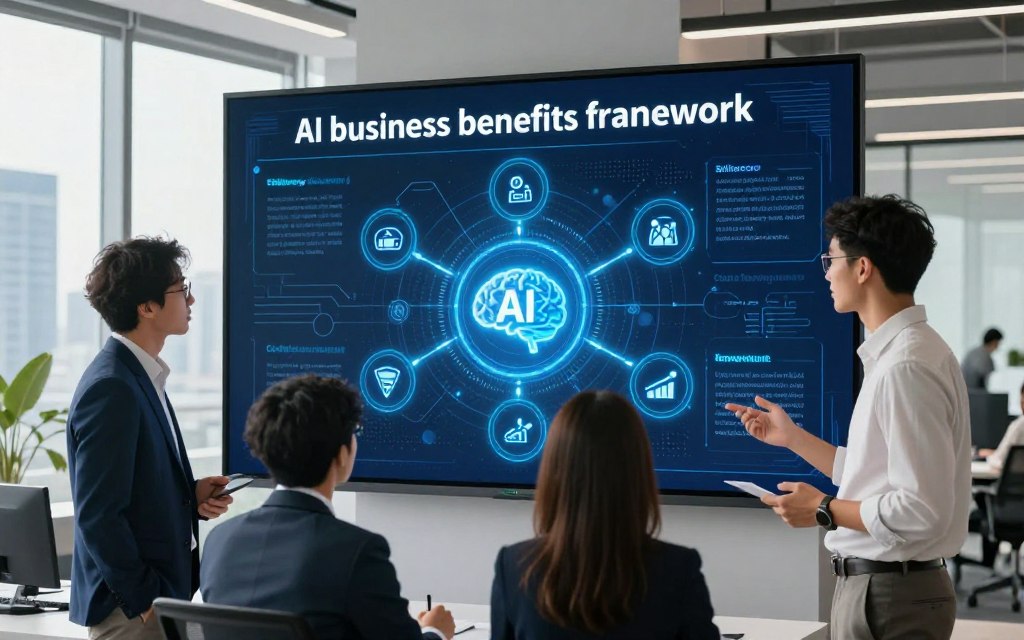
Operational Efficiency is about making things smoother. AI automates tasks in finance, HR, and customer service. This cuts down on costs and errors. It also makes complex systems like supply chains more efficient, reducing waste.
Enhanced Insight is about predicting the future. AI looks at huge amounts of data to find patterns humans can’t see. This turns data into useful business intelligence. Leaders can predict market changes, understand customer feelings, and spot problems before they happen.
Business Growth is about innovation. AI makes marketing and product suggestions more personal. It speeds up research and development. It also helps companies create new services or models that were once impossible.
| Core Pillar | Primary Mechanism | Key Business Outcome | Typical Metric Impact |
|---|---|---|---|
| Operational Efficiency | Intelligent Process Automation | Significant cost reduction and error elimination | Lower operational expenditure (OPEX), increased throughput |
| Enhanced Insight | Predictive Analytics & Data Mining | Superior business intelligence for proactive decisions | Improved forecast accuracy, higher risk-adjusted returns |
| Business Growth | Personalisation & Innovation Enablement | New revenue streams and enhanced customer lifetime value | Increased market share, higher customer acquisition and retention |
The real power of AI comes when these areas work together. For example, using customer data for marketing (Enhanced Insight) can lead to new revenue streams (Business Growth). At the same time, AI chatbots handle customer service queries efficiently (Operational Efficiency). This combination is what makes AI a strategic must-have.
Revolutionising Operational Efficiency and Reducing Costs
AI is making a real difference in business, making things run smoother and cheaper. It does this by taking over repetitive tasks, working faster and more accurately. This means businesses can save money and be more flexible.
Intelligent Automation of Routine Processes
Intelligent automation is key to this efficiency boost. It’s not just simple scripts; these AI systems can learn and adapt. They handle complex tasks that used to need humans, freeing up employees for more creative work.
Practical Applications: From Finance to Human Resources
Automation touches almost every part of administration:
- Finance & Accounting: AI tools handle data entry, check transactions, and process invoices without mistakes. This saves money and speeds up financial reports.
- Human Resources: AI automates paperwork, checks CVs, and answers employee questions. This makes HR work smoother for everyone.
- Healthcare Administration: AI can read and update doctor’s notes in Electronic Health Records. This cuts down on paperwork for doctors and nurses.
A resource on how AI improves efficiency shows big savings in time and costs.
Transforming Supply Chain and Inventory Management
AI is changing how we manage physical operations. It makes complex supply chains more manageable, turning them into a key advantage.
AI uses data to predict demand accurately. This helps retailers keep the right amount of stock, avoiding waste and lost sales.
AI also optimises logistics in real-time. It finds the best delivery routes and forecasts delays. This makes the supply chain more efficient and adaptable.
AI in logistics isn’t just about speed. It’s about making the whole chain smarter and more proactive.
In short, AI is a game-changer for efficiency. It handles routine tasks and provides insights for better management. This is how businesses save money and grow.
Powering Smarter Decisions with Predictive Analytics
Predictive analytics, powered by artificial intelligence, is changing how businesses make decisions. It moves from guessing to knowing what will happen next. This helps leaders plan ahead, giving them a big advantage over competitors.
From Historical Data to Future Insights
Predictive analytics uses old data to guess what will happen next. Old methods struggle with today’s big data. But AI, like machine learning, is great at this.
It looks at lots of data fast, finding patterns humans might miss. This turns data into useful predictions. For example, it can guess how many products to make based on past sales and website visits.
It also predicts which customers might leave, helping keep them. Machine learning finds patterns better than humans. This makes forecasts for market changes and inventory needs more reliable.

Dynamic Dashboards and Real-Time Business Intelligence
Useless predictions are a problem. Modern Business Intelligence (BI) uses AI to fix this. It puts predictions on dashboards, giving leaders quick, useful insights.
Instead of old reports, leaders see live data and forecasts. A marketing director can see how campaigns are doing and predict future leads. This helps make fast, smart decisions.
It lets leaders try out different plans and see how they might work. This makes sure every decision is based on the latest information. AI makes business intelligence real-time, helping leaders make better choices.
Delivering Hyper-Personalised Customer Experiences
AI is changing how we connect with customers. It makes personalisation at a large scale possible. This means treating each customer as an individual, leading to a more engaging, loyal, and profitable customer base.
AI uses big data to understand customer behaviour in real-time. It then tailors every interaction, from the first email to after-sales support. This makes each interaction feel special.
AI-Driven Customer Support and Engagement
Chatbots and virtual assistants are changing customer service. They use AI to understand and respond to customers in a human-like way. They answer simple questions 24/7.
This makes customers happier. When they need more help, they get a human who knows their situation. This mix improves both speed and the quality of human service.
One big company saved USD 80 million by using AI for customer support. It focused on high-value clients and automated routine tasks. This improved service while saving money.
Personalised Marketing and Recommendation Systems
Marketing has moved from broad campaigns to one-to-one messages. AI looks at what each customer buys and does online. This lets companies guess what they might want next.
Netflix and Amazon lead in this area. Their recommendation systems boost user engagement and sales. They suggest the perfect show or product, making things relevant and convenient.
AI also helps with marketing by segmenting audiences in real-time. This means emails and ads are always on point. It’s a big step up from old ways.
Generative AI is a new tool for making custom content. It can create unique marketing messages, product descriptions, or visuals. This makes mass communication feel personal.
The goal is to offer anticipatory service that feels uniquely tailored. This deep personalisation is key to building lasting loyalty in today’s digital world.
Catalysing Innovation and Product Development
Innovation is key to staying ahead, and AI is speeding it up. It’s not just about making things better; AI is changing what we make and how we make it. This change is taking businesses from just getting better to truly changing.
Accelerating Research, Design, and Testing
AI is making development much quicker. In software, it helps write and test code, freeing up developers for the hard stuff. In pharma, it looks through huge amounts of data to find new drugs, cutting years off research.
A study by Agoda showed that 37% of engineers save four to six hours a week with AI. This extra time means they can design and test more.
AI helps in many areas, like car design and consumer goods. It makes it faster to go from idea to product, helping companies keep up with trends.
Creating New Revenue Streams and Business Models
AI finds new ways to make money for companies. For example, data from self-driving cars could lead to new insurance models. This is a big part of AI’s role in changing how businesses make money.
Companies are using AI to start new businesses. They’re creating data services, custom subscriptions, and AI-powered customer services. These are not just new products but new ways of doing business.
Using AI wisely is key to finding these new opportunities. It helps spot customer needs and market gaps. This can lead to new services that shake up industries and bring in new players.
AI’s role in innovation is huge. It speeds up making things and opens up new markets. Companies that use AI well don’t just get better; they change the game.
Fortifying Risk Management and Cybersecurity
Artificial intelligence is key in protecting companies from fraud and cyber threats. It makes risk management stronger by using predictive and analytical tools. This turns security into a strategic asset, keeping assets and reputation safe.
Advanced Fraud Detection and Prevention
Financial and e-commerce sites face constant fraud threats. Old systems can’t catch new scams. AI, like machine learning, looks at millions of transactions to spot normal patterns.
It then finds unusual activity, like odd purchases or login patterns, with high accuracy. This change from fixed rules to dynamic analysis is a big leap forward.
Using AI for risk management saves a lot of money. IBM found that companies using AI save about $1.76 million on data breach costs. This shows AI’s value in protecting against fraud.

Proactive Threat Identification in IT Security
Cybersecurity now means constant watchfulness inside the network. AI systems monitor traffic, user actions, and logs 24/7. They find threats before they become big problems.
AIOps (Artificial Intelligence for IT Operations) is central here. It uses machine learning to understand vast amounts of data. It spots small changes that could mean trouble, helping IT teams fix issues fast.
This approach shifts from reacting to threats to preventing them. Security teams can stop attacks before they start, thanks to AI.
“The integration of AI into cybersecurity frameworks represents the most significant evolution in threat defence in the past decade. It allows us to move at the speed of the attacker, anticipating moves instead of just documenting losses.”
The table below shows how AI changes security compared to old methods:
| Aspect | AI-Driven Security Posture | Traditional Security Posture |
|---|---|---|
| Primary Method | Behavioural analysis & anomaly detection | Signature-based rules & known threat databases |
| Threat Response | Proactive and predictive | Reactive and investigative |
| Adaptation Speed | Learns and evolves in real-time | Requires manual rule updates |
| Data Handling | Analyses vast, unstructured data sets | Limited to structured, predefined data points |
| Operational Impact | Enables continuous, automated monitoring (AIOps) | Relies heavily on human analyst intervention |
Using AI in risk management and cybersecurity is more than just a tech update. It changes how companies see and handle risks. This leads to better resilience, cost savings, and keeping customer trust.
Optimising Marketing Campaigns and Sales Processes
AI gives businesses a big advantage. It helps them not just reach people but understand their needs very well. This makes marketing and sales more precise and predictive.
This leads to a strong form of marketing optimisation. It boosts revenue growth.
Intelligent Advertising and Audience Segmentation
Old ways of targeting are gone. Now, AI uses lots of data to find the right people. It looks at who they are, what they do online, and what they buy.
It even checks their social media to understand them better. This makes very detailed audience groups.
You can now target “left-handed gardeners who bought organic fertiliser in the last month and follow sustainability blogs”. This level of detail is the engine behind micro-targeted campaigns. They deliver the perfect message to the perfect person at the perfect moment.

Such precision boosts conversion rates. It also makes sure your marketing budget is used wisely. This is how AI maximises marketing return on investment (ROI). It turns wasted ad spend into measurable growth.
These systems learn and adjust all the time. If a campaign doesn’t do well, AI can quickly move funds to better-performing groups. This makes marketing self-optimising.
Enhancing Sales Forecasting and Lead Prioritisation
AI also helps a lot in sales. One big problem is chasing leads that won’t convert. AI fixes this with advanced lead scoring.
It looks at a lead’s online activity, how they engage, and what they do. This gives a score on how likely they are to buy. Sales reps get a list of top leads.
This saves time and boosts closing rates. AI also suggests the best next steps. It might suggest sending a case study or a product demo.
For forecasting, AI goes beyond simple guesses. It looks at past sales, the current pipeline, trends, and market conditions. This gives a much more accurate forecast.
Managers get a clear view of future revenue. This helps with planning, allocating resources, and setting goals. AI turns sales into a predictable, data-driven growth engine.
Essential Steps for Successful AI Implementation
Going from pilot projects to using AI across the whole company needs solid groundwork. This includes data governance, infrastructure, and culture. Success isn’t just about the tech. It’s about a careful plan that fits with your business goals.
First, you need a clear plan for how AI will help your business. Look at areas like cutting costs, improving customer service, or boosting innovation. Having a clear goal helps make every decision easier.
Building a Robust Data Strategy and Infrastructure
AI works best with good data. The quality, amount, and how easy it is to get to are all key. So, a strong data strategy is essential for AI success.
This strategy must also handle who owns the data and how it’s used. It’s important to have clean, labelled data to avoid AI mistakes.
Here are some key parts of a good data strategy:
- Centralised Data Access: Make sure AI can use all the data it needs.
- Quality Assurance Protocols: Keep data accurate and relevant.
- Scalable Infrastructure: Use cloud platforms for AI’s computing needs.
- Security and Compliance Frameworks: Keep data safe and follow rules like GDPR.

Building this foundation makes data useful for insights. It leads to predictive analytics and automation that change business for the better.
Addressing Talent, Ethics, and Organisational Change
AI’s success also depends on people. It’s not just about the tech. You need to handle talent, ethics, and culture changes.
Finding the right people is hard. You need both new talent and to train current staff. This ensures everyone can work with AI.
Training is key. It helps staff use AI well. This way, AI helps people, not replaces them.
Thinking about ethics is also important. AI can be biased if the data is wrong. Having rules for AI use is vital for trust.
“The biggest risk with AI is not that it will become too smart, but that we will use it without being smart enough about its implications.”
Leaders must also lead change well. Talking openly about AI’s role helps. Getting teams involved makes them more likely to accept AI.
The Evolving Landscape: Future AI Trends for Business
The future of AI looks set to change how businesses work in big ways. AI is moving from being a tool to becoming a key partner in business strategy. It’s important for companies to understand these future AI trends to stay ahead.
The Business Impact of Generative AI Tools
Generative AI is growing from a fun tool for making text and images to a major business tool. Gartner says it will make 30% of marketing content by 2025. But its real power is in tasks like designing products, planning finances, and making customer communications personal at a huge scale.
Its impact is wide-ranging. It’s used for:
- Accelerated Design & Prototyping: Creating initial designs, models, or plans to speed up innovation.
- Dynamic Personalisation: Making marketing, product descriptions, and support unique for each customer.
- Advanced Simulation: Testing supply chain issues, market changes, or new business ideas to help plan.
But, it needs careful human oversight. Quality control, ethical guidelines, and brand consistency are key. The aim is to enhance human creativity, not replace it.
Towards More Autonomous and Integrated Systems
We’re moving towards AI that can act on its own. Imagine AI handling a supply chain alert, finding new suppliers, negotiating, updating systems, and telling everyone involved, all by itself.
This move towards autonomous systems is linked to deeper integration. AI will connect all parts of a business, not just marketing, finance, or operations. This integration brings:
- Holistic Predictive Analytics: Using data from sales, logistics, and customer service to predict demand accurately.
- Intelligent Process Orchestration: Managing workflows from start to finish, improving efficiency and results.
- Unified Business Intelligence: Giving leaders a real-time view of the business, where insights from one area help others.
These future AI trends show AI becoming a part of business, not just a tool. Success will depend on getting data ready, adapting to change, and guiding AI towards business goals.
Conclusion
Exploring artificial intelligence in business shows its true power. It’s not just about making things easier. It’s about making things better.
AI brings many benefits to businesses. It makes operations more efficient, helps make better decisions, and creates custom experiences. This is why 80% of professionals think AI will change their work a lot in five years.
To use AI well, you need a good plan. You need strong data systems and to think about the people side. It’s about using technology and people together.
For businesses today, using AI is essential. It’s not just a nice-to-have. It’s a must for staying ahead and innovating. The first step is to see AI as key to your future plans.


 By
By