


The world of business is changing fast. For companies looking ahead, artificial intelligence is more than just new tech. It’s a key to growing faster and changing how businesses work.
An expert says, “AI marketing is the future for how we connect with our target audiences.” This connection is key to success today. The real chance is in using these tools to make customer experiences personal and relevant.
This way boosts marketing acceleration. Smarter and quicker campaigns lead to fast results. Businesses should see AI as a partner to drive growth, not just a tech challenge.
That broader goal of using AI to accelerate business growth depends on connecting campaign automation with measurable commercial outcomes.
Getting good at this is now a must for staying ahead. It’s not just about growing; it’s about leading the market. Here, we’ll look at how to use AI for your business goals.
The AI Marketing Revolution: A New Era for Business
The marketing world is changing fast, thanks to artificial intelligence. It’s not just an update; it’s a big change in how we connect with our audience. The AI revolution is here, making data work harder to get better results.
Defining Artificial Intelligence in Modern Marketing
In modern marketing, AI means systems that can learn and act on their own. It’s more than just following rules. AI looks at lots of data, finds patterns, and makes smart choices without needing us all the time.
This is really important. As one expert says,
“In 2025, marketing is all about data… AI makes this process much simpler. It does quickly, and at scale, what would be onerous to achieve by hand.”
So, AI can do things like understand how people feel, sort customers, and make content just for them. It does it all fast and accurately, something humans can’t do alone.
The Shift from Optional Tool to Core Competency
Artificial intelligence has grown from a special tool to a must-have. What was once a plus for early users is now a must for keeping up. It’s everywhere, from social media to big campaigns.
Now, marketing teams use AI in their daily work. It helps them be more proactive and accurate. Businesses that use AI well get ahead, using resources better and finding new ways to grow.
Using AI is no longer a choice; it’s a must. The change in modern marketing is clear. The winners will be those who make AI a key part of their strategy.
How to Use AI for Business Marketing: A Strategic Overview
Using AI in marketing is about making human work better with data. A good AI marketing strategy is not just about new tools. It’s about changing how we make decisions and add value. It helps us move from just doing things to doing them with insight and purpose.
Moving Beyond Automation to Intelligent Enhancement
For a long time, marketing automation was about making tasks like email sending easier. But that’s just the start. True intelligent enhancement happens when AI looks at complex data, predicts what will happen, and suggests actions we might miss.
This change helps us plan better. As experts say, “AI makes strategy proactive: Real-time insights let businesses spot trends early and make better choices.” This means we can guess what customers want and what’s happening in the market, not just react to it. AI also helps leaders focus on the most important work, like creativity and strategy.
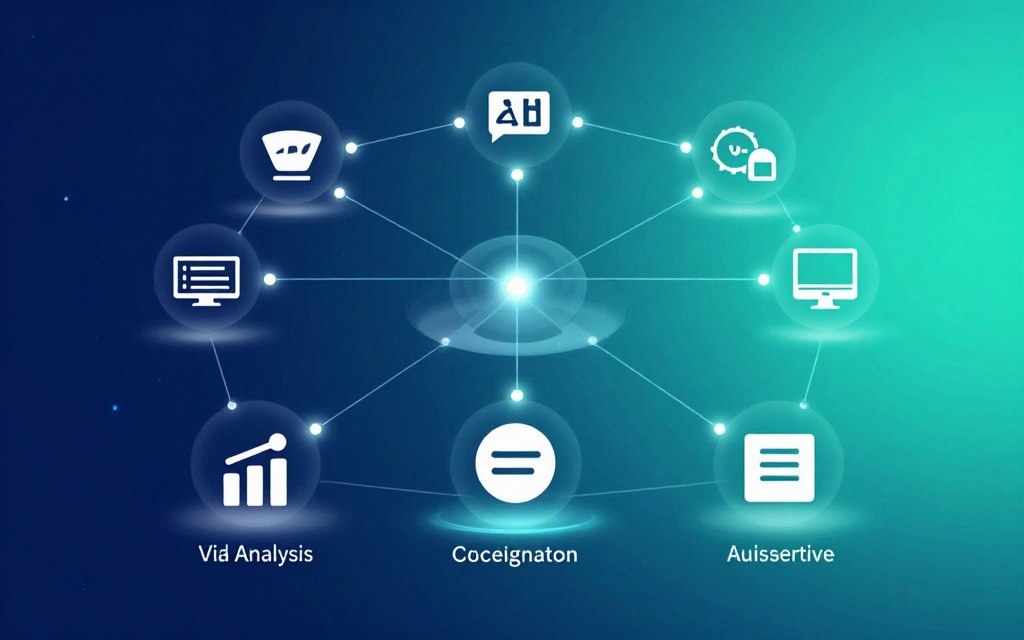
The Four Pillars: Creation, Optimisation, Personalisation, Insight
To use AI well, focus on four key areas. These are where AI really helps by making human work better.
- Content Creation: AI helps come up with ideas, write, and make visuals, speeding up the creative process while keeping the brand’s voice.
- Campaign Optimisation: AI tweaks ads in real-time to get the best return on investment.
- Customer Personalisation: AI makes websites, emails, and product suggestions fit each user’s behaviour.
- Data Insight: AI mixes lots of data to find trends, predict outcomes, and give useful insights.
These pillars work together to make marketing a powerful tool for growth. The next parts will dive into each pillar, showing how to put this strategy into action.
Tangible Benefits of Integrating AI into Your Marketing
AI brings real improvements to marketing, from cutting costs to strengthening customer ties. These gains offer a strong return on investment and a clear edge over competitors.
Dramatic Increases in Operational Efficiency
One big win is a big boost in marketing efficiency. Tasks that took hours now take minutes. This includes writing, data mining, and making visuals.
An expert says, “It really makes your work easier… It’s a real efficiency driver.” AI tools handle the routine tasks. This lets your team focus on strategy and creativity.
This makes your operation leaner and faster. Campaigns start quicker, reports come out automatically, and resources go to creative work.
Achieving Personalisation at an Unprecedented Scale
AI makes personalising messages at a huge scale possible. It analyses data in real time to tailor messages to each person’s preferences.
Think of Netflix’s recommendations or Amazon’s “customers who bought this” suggestions. These are powered by AI. They make customers feel special and valued.
AI’s predictive power allows businesses to anticipate customer preferences… and craft experiences that make customers feel seen and valued.
This personal touch, done at a large scale, turns generic messages into personal conversations.
From Retrospective to Predictive Analytics
AI changes how we analyse data. Old methods look at past results. Predictive analytics uses AI to forecast the future.
This lets you see market trends, predict customer loss, and guess campaign success before it starts. Here’s how it differs:
| Analytical Metric | Traditional Retrospective Analytics | AI-Powered Predictive Analytics |
|---|---|---|
| Primary Data Focus | Historical performance data | Real-time data combined with historical patterns |
| Type of Insight Generated | Descriptive (What happened?) | Prescriptive (What is likely to happen?) |
| Actionability | Informs future strategy based on past results | Recommends specific actions to capitalise on predicted outcomes |
| Speed of Insight | Often delayed due to manual reporting cycles | Continuous, real-time forecasting and alerts |
This forward-looking approach lets you adjust strategies proactively. It optimises spending and planning with great accuracy.
Improving Customer Lifetime Value and Loyalty
All these benefits lead to more loyal customers. Personalised experiences boost satisfaction and engagement. AI also spots at-risk customers early, helping to keep them.
When customers get offers that match their interests, they’re more likely to buy again and recommend your brand. AI maximises each customer’s value by caring for them at every touchpoint.
AI makes your marketing smarter and more focused on customers. This drives lasting growth and strengthens your market position.
AI for Content Marketing: Ideation, Creation, and Optimisation
Forget the blank page. AI tools now offer a smart way to create marketing content. This guide will show you how to use AI content creation to stay ahead every day.

Step 1: Generate Ideas and Plan Your Content Calendar
Good content starts with a clear plan. AI helps you avoid guesswork. It uses data to find out what your audience wants and how to present it best.
Using AI for Keyword Research and Topic Clustering
AI tools look at search results and what people want. They find keywords you might miss and group topics together. This helps you build authority in your field.
Tools like Frase and MarketMuse for Content Strategy
Tools like Frase and MarketMuse are great for planning. They give you content briefs, suggest questions, and show content gaps. This helps you plan a calendar that meets user needs and supports your content optimisation goals.
Step 2: Produce High-Quality Drafts and Visuals
With a plan, AI helps you write and design faster. It keeps your work quality high.
Leveraging AI Writers: Jasper, Copy.ai, and Writesonic
AI writing tools like Jasper, Copy.ai, and Writesonic are very good. They help you:
- Get past writer’s block with first drafts and outlines.
- Make different versions of headlines, email subject lines, or product descriptions for testing.
- Expand bullet points into full paragraphs.
As one source notes, “Jasper… is remarkably good at creating copy, in a range of tones and styles.” For SEO, Surfer SEO guides your writing to rank better.
| Tool | Best For | Key Strength |
|---|---|---|
| Jasper | Long-form content & marketing copy | Brand voice customisation and templates |
| Copy.ai | Short-form content & social media | Speed and vast array of content frameworks |
| Writesonic | Ads, landing pages, & blogs | Integration with GPT-4 for high-quality output |
Creating Images with Midjourney and DALL-E
Visual content is no longer a problem. AI image generators like Midjourney and DALL-E create unique images from text prompts. For example, Lexica Art is a top choice for creating blog thumbnail images quickly and affordably.
Step 3: Optimise and Repurpose Content Efficiently
The last stage makes the most of your content. AI helps refine it for clarity and SEO, then reuses it for different channels.
AI-Powered Editing with Grammarly and Hemingway
After writing, use Grammarly and the Hemingway Editor. They improve readability, tone, and sentence structure. This makes your content error-free, engaging, and easy to read.
Transforming Blogs into Social Snippets and Videos
True content optimisation means sharing it more. AI can turn long blog posts into social media posts or videos. Tools like Crayo make short videos from text articles, perfect for TikTok and Instagram Reels. This boosts the value of your AI content creation.
AI-Driven Advertising: Smarter Campaigns and Better ROAS
The old days of manual bid adjustments and guessing are over. AI is now at the forefront, making advertising smarter. This change is key for marketers wanting to boost their return on ad spend (ROAS) in today’s digital world. AI helps turn your ads into a dynamic, learning profit engine through three steps: smart bidding, creative changes, and predicting who to target.
Step 1: Implement Smart Bidding and Budget Management
Manual bids and guessing are a thing of the past. AI smart bidding looks at many signals to set the best bid for each auction in real-time. This turns budget management into a proactive strategy focused on your goals, like getting conversions or increasing conversion value.
Utilising Google’s Smart Bidding and Meta’s Advantage+
Google Ads and Meta Ads now use AI in their systems. Google’s Smart Bidding and Meta’s Advantage+ shopping campaigns use machine learning to optimise your campaigns. They adjust bids and placements instantly based on performance data. This means your budget works harder where it counts, leading to big ROAS improvement.
- Maximises conversion value for every pound spent.
- Dramatically reduces time spent on manual bid adjustments.
- Continuously learns and adapts to market fluctuations.
Step 2: Dynamically Generate and Test Ad Creatives
Ad fatigue is a major problem for ROAS. AI solves this by automating the creation and testing of many ad variants. This lets you move from a few static ads to a dynamic library, allowing for quick A/B testing to find what works best with your audience.
Platforms like Pictory and Canva for Video and Design
Tools like Pictory for video and Canva for design use AI to make creating ads easier. They can create different visual styles, edit videos from text prompts, and suggest design layouts. This means your team can make lots of quality ads fast. Then, AI can help pick the best ones to show, always improving your ads.
Step 3: Discover and Target High-Intent Audiences
The best AI advertising goes to the right people. Advanced AI is great at finding and modelling your ideal customer. It looks at more than just demographics to find users based on real-time intent and predictive behaviours, making sure your spend reaches the most promising prospects.
Lookalike Modelling and Predictive Audience Building
AI doesn’t just find similar users; it predicts which ones are most likely to convert *now*. By looking at first-party data and market signals, AI builds predictive audiences with high-intent behaviours. This forward-looking approach makes audience targeting proactive, improving campaign efficiency and ROAS.
Personalising the Customer Journey with AI
AI lets marketers create special paths for each visitor. This shift to hyper-personalisation makes every touchpoint unique. It builds deeper engagement and boosts commercial growth.
Delivering Dynamic Website and In-App Experiences
Static web pages are outdated. Now, AI tools change content, offers, and layouts in real-time. This makes digital experiences truly adaptive.
Platforms like Dynamic Yield and Optimizely use machine learning. They test different versions and serve the best one to each visitor. They look at clicks, scroll depth, and time on page to make quick decisions.
Advanced behavioural analytics go further. “Fullstory use AI to track every cursor move, click, and page visit across a visitor’s journey to create their ‘story’.” This detailed understanding is key for powerful dynamic experiences.
Tools like Dynamic Yield and Optimizely
These platforms lead in experience optimisation. They go beyond A/B testing to AI-driven personalisation. You can target users by location, device, referral source, or past actions.
Crafting Personalised Email and Messaging Sequences
Generic email blasts don’t work well. AI changes this by automating segmentation and content customisation. Messages feel individually crafted, making them more effective.
Big platforms like HubSpot and Mailchimp now have AI features. They analyse subscriber engagement, demographic data, and purchase history. They then segment lists and personalise messages.
This turns email into a one-to-one conversation channel. As highlighted, “HubSpot… personalises marketing content.” This leads to higher open rates, click-through rates, and conversions.
AI in Platforms like HubSpot and Mailchimp
The integration is seamless. Marketers set parameters, and AI does the complex work. It can even predict the best send time for each recipient.
Powering Intelligent Product Recommendations
This is a key form of AI personalisation. Effective recommendations increase average order value and customer satisfaction. They guide users to products they are likely to buy.
Solutions like Amazon Personalize (AWS) and Klevu bring this technology to any business. They use algorithms to analyse browsing behaviour, purchase history, and similar profiles.
“By analysing purchase history, browsing behavior, and demographic information, [Amazon’s] recommendation engine delivers tailored product suggestions.”
You see this on e-commerce sites as “Customers who bought this also bought…” or “Recommended for you”. These are not random; they are calculated suggestions that drive revenue.
Solutions from Amazon Personalize and Klevu
These services provide machine learning models without needing deep data science expertise. They integrate with your e-commerce platform to deploy recommendation widgets across your site.
The table below provides a clear comparison of these core personalisation areas and their leading tools:
| Personalisation Area | Primary Function | Example Tools | Key Benefit |
|---|---|---|---|
| Dynamic Experiences | Adapts website/app content in real-time | Dynamic Yield, Optimizely | Increases engagement & conversion per visit |
| Email & Messaging | Tailors communication sequences | HubSpot, Mailchimp | Boosts open rates & click-through rates |
| Product Recommendations | Suggests relevant items to users | Amazon Personalize, Klevu | Raises average order value & customer loyalty |
Together, these strategies form a complete approach to customer journey personalisation. They ensure no interaction is generic, making each customer feel uniquely understood and valued.
Enhancing Customer Service and Sentiment Analysis
The post-sale phase is a chance to build loyalty. AI is changing how businesses talk to and understand their customers. It moves beyond just selling to building lasting relationships.
By using artificial intelligence, companies can turn support into a key growth area. This helps manage their reputation too.
Deploying 24/7 Conversational AI Chatbots
Modern AI customer service starts with smart chatbots that work all the time. They handle simple questions, suggest products, and even make purchases instantly. This lets human staff focus on harder problems.
Tools like Chatfuel make it easy to create complex chat flows. You don’t need to know how to code.
Examples: Intercom, Drift, and Zendesk Answer Bot
Each tool has its own strengths for different needs:
- Intercom: It’s great for sending messages that feel personal. It works well in web apps and websites.
- Drift: It’s all about marketing and sales through chat. AI helps qualify leads and book meetings.
- Zendesk Answer Bot: It works with help desk software. It gives instant answers from your knowledge base, reducing support tickets.
These chatbots do more than just answer questions. They help make money and gather important customer data.
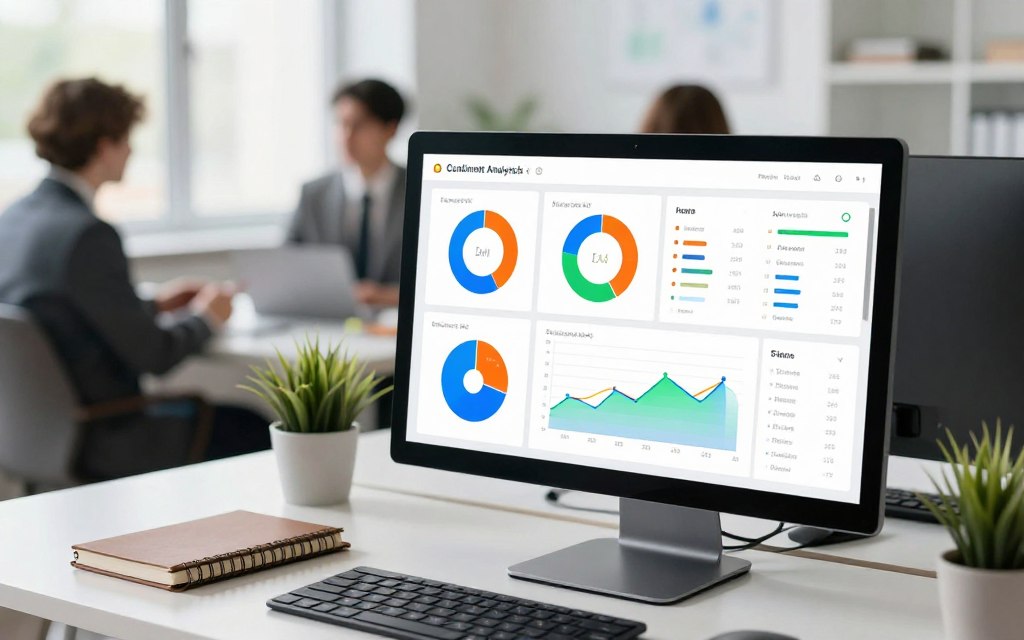
Analysing Voice and Text for Real-Time Sentiment
It’s key to know how customers feel. AI-powered sentiment analysis looks at lots of data from social media and reviews. It tells brands how people feel right away.
This lets brands act quickly to protect their reputation. It shows both good and bad feedback, helping spot problems early.
Using Brandwatch and Sprout Social for Insights
Specialised platforms turn data into useful information. Brandwatch tracks brand mentions and trends online. Sprout Social helps manage social media and understand sentiment.
For other options, Gumloop collects reviews and Brand24 monitors media. These tools help businesses understand their customers better.
Using these tools shows a business cares about its customers. Our guide to AI-driven sentiment analysis shows how to use these insights to improve customer loyalty.
Gaining Competitive Advantage with AI Analytics
AI analytics is now key to beating the competition. It turns messy data into clear insights. This helps marketers make smart, data-driven choices. Learning to use AI analytics well is key to staying ahead in business.
Automating Marketing Reporting and Dashboards
Manual report making is a big waste of time. It often shows old data. AI analytics tools change this by combining data from many sources.
They make live dashboards that show how things are going. This lets teams focus on trends, not just data.
Tools like Claude Artifacts can make reports fast. They use simple prompts to create detailed reports and charts.
Microsoft Power BI and Tableau with AI Features
Top business tools now use AI. Microsoft Power BI and Tableau have smart features. You can ask questions in English to get charts.
They also spot important changes in data. This makes every marketer a data expert.
Conducting Predictive Analysis for Trend Forecasting
Predictive analysis looks ahead, not back. It uses past data and AI to guess what will happen next. This is a big help for planning.
Marketers can guess when customers will leave, predict sales, or check if a campaign will work. Predictive models help make strategies that really work. You can plan ahead instead of just reacting.
Performing AI-Powered Competitor Analysis
Knowing what your rivals do is key. But it’s hard to keep up with them all by hand. AI-powered competitive intelligence makes this easy. It watches what competitors do online.
This includes their ads, keywords, content, social media, and prices. AI finds out what they’re focusing on and where they might be weak.

AI keeps you up to date on what rivals are doing. It finds gaps in their plans that you can use. You always know what’s happening in the market.
| Capability | Traditional Approach | AI-Enhanced Approach | Key Benefit |
|---|---|---|---|
| Reporting | Manual spreadsheet compilation, static weekly/monthly reports. | Automated, real-time dashboards with natural language insights. | Saves 10+ hours weekly, provides instant performance visibility. |
| Trend Forecasting | Historical analysis based on intuition or simple extrapolation. | Predictive models using machine learning to forecast customer behaviour and market shifts. | Enables proactive strategy, reduces campaign risk, identifies emerging opportunities. |
| Competitor Analysis | Ad-hoc manual reviews of competitor websites and social media. | Continuous, automated monitoring of digital activity with sentiment and strategy analysis. | Provides real-time strategic intelligence, reveals market gaps and rival vulnerabilities. |
Selecting and Implementing the Right AI Tools
Your journey to AI-powered marketing success starts with checking your current tools. It’s important to pick new technologies wisely. With many options, choosing the right tools saves money and boosts value.

Auditing Your Tech Stack and Identifying Gaps
First, review your marketing technology stack. List all tools, from CRM to social media software.
Find out where you struggle. Is manual reporting taking too much time? Is personalisation not as good as you want? Knowing these gaps helps you see where AI can make a big difference.
It’s likely that you’ll use more than one AI-powered software solution.
Your audit should also look at how tools work together. Aim for a system that’s connected, not separate tools.
Evaluating All-in-One Suites vs. Best-of-Breed Tools
Decide between a single platform or special tools. All-in-one platforms have AI built into many areas, like CRM and ads.
This makes managing easier and data flows better. Best-of-breed solutions offer advanced AI for specific tasks, like making content or bidding.
Think about your team’s size and skills. A suite might be easier to start with. But, a mix of top tools could offer better performance for those ready to handle integrations.
CRM Platforms: Salesforce Einstein and Microsoft Dynamics 365
Modern CRM platforms use AI to understand customers. Salesforce Einstein uses data to predict what customers might do next and score leads.
Microsoft Dynamics 365 uses AI to give insights and predict customer needs. It turns your CRM into a smart prediction tool.
Marketing Hubs: Adobe Marketo Engage and Oracle Eloqua
For complex campaigns, AI marketing hubs are key. Adobe Marketo Engage personalises customer journeys and predicts engagement.
Oracle Eloqua uses AI for lead scoring and content analysis. These platforms make campaigns smarter and more effective.
Building a Phased Implementation Roadmap
Don’t try to do everything at once. A phased plan is safer and more effective. Start with a small project that solves a big problem.
This could be using AI for ad bidding or chatbots for customer service. A small project helps your team get confident and show quick wins.
Later phases can add more tools and automate more tasks. This step-by-step approach helps you build skills and prove the value of AI at each step.
Building an AI-Ready Marketing Team and Culture
To get the most out of AI in marketing, leaders need to focus on their teams and culture as much as the tech. The best algorithms can’t make up for a lack of skills or a cautious culture. Success depends on creating a space where your AI marketing team can thrive, innovate, and act with ethics.
Upskilling Your Team: Essential AI Competencies
The world is changing fast. A key insight is:
“Your job will not be taken by AI. It will be taken by a person who knows how to use AI.”
This shows the importance of continuous learning. Upskilling your team is essential for them to move from watching AI to using it effectively.
Today, skills go beyond traditional marketing. Data literacy is key, helping marketers understand AI insights. Prompt engineering is also vital for creating quality AI content. Knowing how AI works helps everyone work better together.
Leaders are also worried about the next generation. They wonder how to introduce future marketers to AI. Creating strong training programs and working with schools are important steps to fill the skills gap.
Skills vary by role. Here’s a table showing what’s needed for different marketing jobs:
| Marketing Role | Core AI Competency | Key Application | Tool Example Focus |
|---|---|---|---|
| Marketing Strategist | Strategic AI Integration | Identifying processes for AI enhancement, defining success metrics. | Analytics & Forecasting Platforms |
| Content Creator | Prompt Crafting & Optimisation | Briefing AI for draft generation, ideation, and SEO optimisation. | Content & Copywriting AIs |
| Performance Analyst | Data Interpretation & QA | Validating AI-driven insights, spotting anomalies in automated reports. | Business Intelligence Suites |
| Campaign Manager | Automated Workflow Design | Setting up and managing AI-powered bidding, targeting, and creative testing. | Advertising Platform AIs |
Establishing Governance: Ethics, Bias, and Brand Safety
As AI’s role grows, so does our responsibility to use it ethically. Creating a framework for ethical AI is essential for keeping customer trust and protecting your brand. This framework should cover several key areas.
First, transparency is critical. Be open with customers when they’re dealing with AI, like chatbots. Second, human oversight is a must. AI should help, not replace, human decisions, for sensitive or strategic matters.
Another key area is fighting algorithmic bias. AI models can carry existing biases. Regularly check your AI outputs for fairness. Also, listen to customer feedback to understand how your AI is seen and its impact.
A strong governance model also protects data privacy and ensures AI content fits your brand’s voice and safety standards. This prevents damage to your reputation.
Fostering a Test-and-Learn Mindset
Creating the right culture is key to success. An AI-ready culture values a test-and-learn approach. This means embracing experimentation without fear of failure.
Leaders should encourage teams to try new AI tools or strategies in small pilots. Create safe spaces to share results, both successes and lessons. Set aside part of the budget for innovation and testing.
This approach speeds up learning, finds the best AI uses for your business, and boosts agility. When teams feel free to experiment, they drive AI innovation, not just use it.
Measuring the ROI of Your AI Marketing Initiatives
Creating a detailed measurement plan turns AI into a key profit maker for your marketing team. It shows how AI can boost revenue and add value to marketing tools. Without clear performance measurement, even the latest tools are a mystery.
This step is vital. It proves AI’s financial benefits, securing more investment and growing successful projects. It shifts the focus from possible benefits to proven financial gains.
Key Performance Indicators for AI Projects
Good performance measurement starts with the right KPIs. These should focus on AI’s special strengths, not just general marketing metrics.
Look for indicators that show AI’s efficiency, precision, and ability to grow. Consider these metrics:
- Cost-Per-Acquisition (CPA) Reduction: AI aims to lower the cost of getting a customer. Keep an eye on this metric in smart bidding campaigns.
- Content Production Velocity: Track how much time AI saves from idea to publication.
- Personalisation Engagement Rate: See how well personalised web and email experiences boost engagement.
- Lead Scoring Accuracy: Check if AI-qualified leads convert better than traditional ones, improving sales.
As one study says, “You can boost your marketing campaign ROI with better targeting”. These KPIs help measure that.
Attributing Growth to AI-Driven Activities
Attribution is key to proving AI marketing ROI. The challenge is to show AI’s impact in a complex marketing mix.
Use a multi-touch attribution model to credit AI touchpoints, like personalised emails or chatbot interactions. Compare campaign results before and after AI, using holdout groups when you can.
For example, if AI optimises ad creatives, attribute the conversion rate boost to it. This shows AI’s role in shaping business growth.
Calculating Efficiency Gains and Cost Savings
Efficiency gains often lead to quick, tangible benefits. Showing these savings makes a strong case for AI’s value.
To measure gains, review time and resources saved by AI. For instance:
- Time Savings: If AI cuts content drafting time from 5 hours to 1 hour, calculate the saved hours and staff’s hourly rate.
- Operational Cost Reduction: Consider lower costs for A/B testing or customer service after using AI.
- Opportunity Cost: Estimate the strategic work your team can do with time saved from manual tasks.
This detailed financial analysis proves AI’s greater return on investment. It turns soft benefits into clear numbers that finance teams understand and support.
Conclusion
AI’s role in business marketing has changed a lot. It’s now a key part of strategy. AI marketing is the future for reaching our audiences.
Professionals need to learn how to use AI well. This will help them stay ahead in their careers.
Success comes from using AI in a big way. It’s about using it for creating, optimising, personalising, and predicting. This makes marketing a powerful tool for growth.
Businesses that don’t use AI will fall behind. The market is changing fast. Using AI is not just good, it’s necessary for success.
Start planning how to use AI in your business. This will give you a strong advantage. AI is the future of marketing, and it’s here now.
Start checking what you can do with AI. Train your team and use AI in your marketing. This will help your business grow fast and smartly.
FAQ
Is AI in marketing just about automating repetitive tasks?
No, that’s a common misconception. Modern AI in marketing is more than just automating tasks. It uses machine learning and natural language processing to enhance human creativity and strategy. This means it can predict customer behaviour, create content ideas, and personalise experiences, like Netflix and Amazon do.
What are the most immediate efficiency gains I can expect from AI marketing tools?
You’ll see big gains in content production and data analysis. AI can cut down time on keyword research, writing content, and making visuals. It also automates data consolidation, freeing your team to focus on strategy and action.
How does AI enable personalisation at scale for a business?
AI looks at lots of customer data in real-time. It uses this to tailor experiences. This means personalised website content, emails, and product recommendations. Now, businesses of all sizes can offer this level of personalisation with AI.
What is the difference between an all-in-one AI suite and a best-of-breed point solution?
An all-in-one suite like Adobe Experience Cloud offers many AI marketing tools from one vendor. A best-of-breed point solution is a tool that excels in one area, like Jasper for writing or Crayo for AI videos. Your choice depends on whether you want everything in one place or the best tool for a specific task.
What are the key ethical considerations when using AI in marketing?
It’s important to have strong ethical rules. You need to avoid bias, be transparent about data use, and protect customer data. Brands must also make sure AI content fits their values and voice.
How can I measure the ROI of our AI marketing initiatives?
ROI should be measured with specific KPIs. Look at reduction in cost-per-acquisition (CPA), increases in content production speed, higher engagement rates, and improved accuracy in lead scoring. Also, count the time and cost savings from automated tasks to show the value of AI.
Do I need a team of data scientists to implement AI in marketing?
Not necessarily. Many AI marketing tools are easy to use. What’s more important is teaching your marketing team about AI. They need to know how to use AI tools, understand insights, and manage outputs. A test-and-learn mindset is key, not just technical skills.
How does AI-powered competitor analysis work?
AI competitor analysis tools watch what competitors do online. They use natural language processing to check their content and social media. This gives you insights to improve your own strategy.


 By
By