


PinLink (PIN) is a new player in the digital world. It’s a cryptocurrency that works with a Decentralised Physical Infrastructure Network (DePIN). This network uses Real World Assets (RWA) to create something unique.
The main goal of PinLink is to create a marketplace for computing power. This power is key for making artificial intelligence. It connects those who have computing power with those who need it, making the token useful.
This mix of blockchain and physical infrastructure makes PinLink stand out. For those looking into AI crypto investment, it’s a forward-thinking choice. It shows a new way to use tokens.
What is PinLink AI? Project Vision and Core Technology
PinLink AI changes how we use computers for artificial intelligence. It’s not just another cryptocurrency. It’s a platform that solves a big problem in tech: the lack of high-performance computing power.
It connects AI projects with unused hardware. This creates a new way to develop technology.
Introducing the PinLink AI Mission
The mission of PinLink AI is to make AI accessible to everyone. It wants to help small developers, startups, and researchers join the AI revolution. They often can’t afford the expensive GPUs and data centres needed for AI.
PinLink AI creates a global marketplace. People with spare computing power can lease it out. At the same time, AI developers can use this power for their tasks. This turns cloud storage and processing into tradable digital assets.
PinLink also connects AI developers and companies with GPUs, miners, and tokenized cloud storage for high-computing tasks, providing a marketplace for leasing, tokenizing, and trading computing power.
This mission makes AI more efficient and accessible. It helps innovation beyond big corporate labs.
The Convergence of Artificial Intelligence and Blockchain
PinLink AI combines two big technologies: AI and blockchain. AI needs lots of data, power, and secure results. Blockchain offers a secure, global system without a central authority.
This AI blockchain convergence is powerful. Smart contracts handle agreements and payments. This builds trust in the marketplace.
This convergence also supports DeFi. The platform can handle lending, borrowing, and trading of computing power. It creates a decentralised infrastructure for the AI economy.
Key AI Technologies Employed
PinLink AI uses advanced AI technologies. These tools make the platform efficient.
- Machine Learning Models: Predicts demand and sets prices.
- Optimisation Algorithms: Finds the best hardware for tasks, saving time and money.
- Automated Validation Systems: Checks work quality before payment, ensuring integrity.
These technologies make the marketplace run smoothly. It’s automated and reliable, unlike traditional systems.
Underlying Blockchain Architecture and Security
The platform’s security comes from a strong blockchain. It’s built on standards like ERC-20 for wide compatibility.
Security is key when dealing with valuable assets. The architecture has several layers of protection:
- Smart Contract Audits: Checks for vulnerabilities before use.
- Decentralised Consensus: Prevents single points of failure.
- Immutable Ledger: Records all transactions securely.
This architecture supports PinLink AI’s vision. It integrates lending, borrowing, staking, and trading. It also supports DePIN asset tokenization for AI. This creates a liquid market for AI assets.
PinLink AI Crypto Use Cases
PinLink AI is more than just technology. It offers practical tools for the blockchain world. These tools help solve big problems, like making smart financial plans and keeping data safe. They show how PinLink’s cost efficiency and optimised resource utilisation help users and developers.
Revolutionising Decentralised Finance (DeFi)
The DeFi AI of PinLink is changing how we deal with open finance. It uses lots of data to give insights and automate tasks. This was not possible before.
Intelligent Portfolio Management Advisors
PinLink is like a smart, always-on financial advisor. It checks how assets are doing and the risks. It then adjusts your investments to keep your money safe and grow it when it can.
Optimised Yield Farming and Strategy Automation
Finding the best yield farming spots is hard. PinLink’s AI makes it easy by finding the best places for you. It looks at risks and returns to make sure your money works hard.
Enhancing Smart Contract Security and Efficiency
As blockchain apps get more complex, so do their risks. PinLink adds a layer of smart contract security to help.
Automated Auditing and Vulnerability Detection
PinLink checks smart contract code before it’s used. It uses AI to find bugs and security risks. This makes apps safer and more reliable.
Advanced Market Analysis and Forecasting
PinLink’s market analysis AI is fast and accurate. It gives traders and projects a big advantage.

It looks at news, social media, and transactions in real-time. It understands market feelings and trends early. This helps with making smart decisions.
Risk Assessment Models for Traders
PinLink gives traders a risk score for each trade. It looks at many factors to help traders make better choices. This leads to more careful and informed investing.
Facilitating Cross-chain Interoperability
A world with many blockchains limits innovation. PinLink’s AI helps make moving assets between chains easy. It finds the best and safest ways to do this.
It looks at security, speed, and costs of transfers. This makes cross-chain transactions better and cheaper for apps. It helps achieve the goal of using resources well.
The PLINK Token: Utility and Access Mechanisms
The PLINK token is at the core of PinLink, a cryptocurrency for AI tasks and rewards. It’s the key to unlock the platform’s services. It’s used for trading, making decisions, and earning income. Knowing its role is key for deep engagement with PinLink AI.
Primary Utility: Fuel for AI Services
The PLINK token utility is mainly for using PinLink’s AI engines. Every task, from simple queries to complex analyses, needs tokens. This keeps the network running smoothly.
Paying for Analysis, Predictions, and Audits
Users pay with PLINK tokens for AI services. This includes audits, forecasts, and portfolio analysis. Fees vary based on task complexity and data needs. This model suits both casual users and developers.
Subscription Models and Service Tiers
PinLink plans tiered subscriptions for frequent users. These offer fixed monthly token costs for discounts or priority access. Tiers might include:
- Basic: Standard market sentiment analysis.
- Pro: Advanced forecasting tools and API calls.
- Enterprise: Custom AI model training and support.
This meets different user needs, from individual investors to large clients.
Governance Rights and Protocol Influence
PLINK token holders have a say in the platform’s future. This makes users stakeholders, aligning their interests with the project’s success.
Voting on Development Proposals
Token holders vote on proposals that shape the network. Votes are based on token holdings. This includes decisions on new AI models, fee changes, or treasury allocations.
Shaping the Platform’s Future Direction
The community debates the project’s roadmap. Should we focus on DeFi or cross-chain capabilities? Active holders guide these decisions, ensuring the platform meets user needs. This is PinLink’s core philosophy.
Staking for Rewards and Network Participation
Staking is another key token use. It involves locking tokens to support network security.
Stakers earn staking rewards in PIN or ETH. This provides a passive income stream. The dual reward option adds flexibility. Staking also boosts voting power and offers exclusive access.
Tokenomics: Distribution, Supply, and Staking Economics
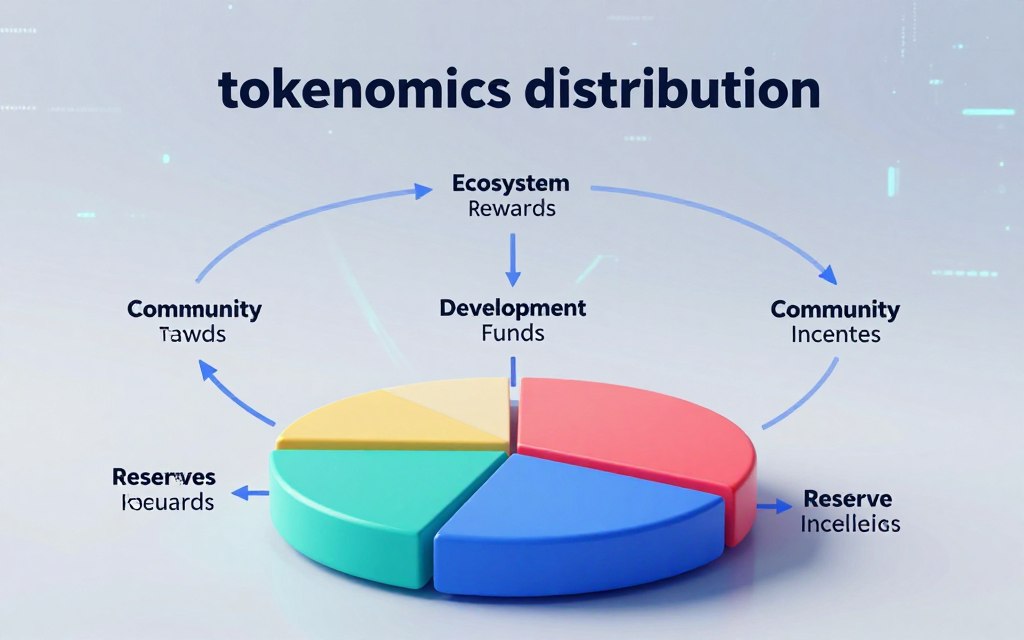
PinLink AI has a unique dual-token economy. Digital tokens get real-world value from physical assets. This tokenomics distribution model aligns incentives and ensures the project’s long-term health.
It ties the PLINK token’s utility to the growing real world assets (RWA) ecosystem.
Token Distribution Schedule and Allocation
A fair initial allocation is key in any crypto-economic model. PinLink AI has structured its PLINK token distribution. It supports development, rewards early backers, and fosters a vibrant community.
Team, Investors, Community, and Treasury
The total maximum supply of 100 million PIN tokens (ERC-20 standard) is split into four main groups. This structure balances immediate growth with future sustainability.
| Allocation Cohort | Percentage of Supply | Primary Purpose |
|---|---|---|
| Community & Ecosystem | 40% | Staking rewards, liquidity mining, user incentives, and grants. |
| Treasury | 25% | Protocol development, strategic partnerships, and future ecosystem funding. |
| Investors | 20% | Seed and private sale rounds to fund initial development and operations. |
| Team & Advisors | 15% | Compensation for founders, developers, and strategic advisors. |
Vesting Periods and Lock-up Schedules
Significant portions of the supply are subject to vesting schedules. This prevents market flooding and ensures long-term commitment. Team and advisor tokens vest linearly over three to four years, with an initial cliff period.
Investor tokens are released gradually according to their agreements. This careful phasing aligns all key stakeholders with the project’s multi-year roadmap.
Supply Mechanics: Inflation, Deflation, and Burns
PinLink AI has a fixed maximum supply of 100 million PIN tokens. The current circulating supply is between 80 and 88.2 million tokens. The rest is held in treasury or subject to vesting.
The protocol has deflationary pressure through transaction fee burns. A small percentage of fees from platform services, like RWA tokenisation, are used to remove PIN from circulation. This creates a balance to new tokens entering the market via staking rewards.
Staking Rewards Structure and Annual Yields
Staking PLINK tokens secures the network and earns passive yield. Rewards are funded from the community allocation and tied to ecosystem activity.
Yields are dynamic, based on staked value, network usage, and revenue from core services. A significant part of the staking reward pool is replenished by the protocol’s income.
This is where the real world assets RWA foundation becomes critical. The dual revenue streams from DePIN asset rentals and fractionalised RWA sales generate real-world value. A share of this value is directed back into the staking economy, benefiting stakers indirectly from the growth and profitability of the physical asset network.
This sophisticated economic design makes PinLink’s tokenomics distribution a living system powered by tangible asset value.
The Expanding PinLink AI Ecosystem
PinLink AI is growing by forming partnerships and encouraging open development. A strong ecosystem is key for long-term success. It turns a single protocol into a base for new ideas. This growth happens in two main ways: making alliances and giving developers advanced tools.
Strategic Partnerships and Integrations
Working with other companies helps PinLink reach more people and find new PinLink AI use cases. By teaming up with other protocols and data networks, PinLink becomes more useful and enters new areas.
For example, PinLink is working with Oraichain and RSS3 on DeSci. They’re building a system for scientific research using AI. This is a great use for PinLink’s secure, on-chain computing.
These partnerships are very valuable. They open up new communities, like researchers, and make PinLink more trusted. They also create solutions that no one project could do alone, growing the market.
Building on PinLink: Developer Tools and dApps
Empowering developers is the other side of growth for PinLink. It offers a range of tools to help developers build dApps easily.
This includes:
- Robust APIs: For easy integration of PinLink’s AI services into apps.
- Software Development Kits (SDKs): To make coding easier for common tasks.
- Extensive Documentation & Tutorials: So developers can start building fast and well.
- Smart Contract Templates: Ready-to-use code for DeFi and data analysis.
These tools help developers build new dApps. They can make advanced portfolio managers, risk tools, or AI crypto trading platforms. Each new dApp makes the ecosystem better, attracting more users and developers.
The strength of PinLink AI comes from partnerships and developer tools. Partnerships guide and grow the platform, while tools spark innovation. Together, they make PinLink a key part of Web3’s future.
Competitive Landscape and Market Market Opportunity
The market for AI-driven blockchain solutions is crowded. Yet, PinLink AI stands out with its DePIN and RWA integration. Success in this sector depends on technological prowess and identifying a specific value chain. A professional competitive analysis is key to understanding PinLink’s position, rivals, and market opportunities.
PinLink AI’s Unique Selling Propositions
PinLink AI is different because of its integrated model. It doesn’t just add AI to blockchain. It uses blockchain to solve critical, expensive problems in AI development.
- Integrated DePIN & RWA Model: Unlike projects focusing solely on digital agents or data, PinLink integrates decentralised physical infrastructure networks (DePIN) with real-world asset (RWA) tokenisation. This allows physical AI compute resources—like GPU clusters—to be represented and traded on-chain.
- Cost Reduction for Developers: The project’s primary goal is to significantly lower infrastructure costs for AI developers. By creating a marketplace for tokenised compute power, it aims to bypass traditional, expensive cloud service providers.
- Unified Financial Layer: The platform seamlessly combines essential DeFi primitives—lending, borrowing, staking, and trading—with these tokenised AI assets. This creates a cohesive ecosystem where financial activity directly supports AI computational work.

Analysis of Key Competitors in the AI Crypto Space
PinLink operates in a sector with several established players, each with a different focus. A clear-eyed view of this landscape is essential for assessing market Opportunity.
Major competitors include Fetch.ai (autonomous economic agents), SingularityNET (decentralised AI marketplace), Render Network (decentralised GPU rendering), and Akash Network (decentralised cloud compute). While all leverage blockchain, their core applications differ.
| Project | Primary Focus | Key Technology | Contrast with PinLink |
|---|---|---|---|
| Fetch.ai | Autonomous agents for complex tasks | Multi-agent systems, AI coordination | Focuses on agent intelligence, not physical infrastructure tokenisation. |
| SingularityNET | Marketplace for AI algorithms | AI service integration, protocol | Centres on software AI services, not the underlying hardware compute. |
| Render Network | Decentralised GPU rendering for graphics | GPU power distribution | Specialises in graphical rendering, not general-purpose AI model training. |
| Akash Network | Decentralised cloud compute marketplace | Container deployment, cloud leasing | Offers generic cloud compute; PinLink tailors for AI workloads and adds integrated DeFi. |
This competitive analysis shows PinLink’s specialisation in AI infrastructure and its combined DePIN+RWA+DeFi approach is unique.
Comparative Advantages of PinLink
PinLink’s distinct model grants it several comparative advantages. Its link to physical assets provides a moat against purely digital AI crypto projects. The tokenisation of real-world compute hardware creates an inherent value anchor that algorithms alone lack.
Further, the integrated financial services are not an afterthought but a core utility. Developers can not only access cheaper compute but also leverage their tokenised assets for liquidity. This creates a powerful flywheel effect that pure compute marketplaces or AI agent platforms cannot easily replicate.
Identifying Target Market Niches
PinLink is strategically positioned to capture value in specific, high-growth niches. Its offerings are not for casual users but for professional entities with clear pain points.
The primary target market is AI development firms and startups burdened by soaring GPU cloud costs. A secondary niche includes computational resource providers (like data centres) seeking more efficient monetisation of their idle hardware through tokenisation.
Lastly, the integrated DeFi layer targets DeFi natives and investors looking for yield opportunities backed by productive, real-world AI assets, not just speculative tokens. By dominating these interconnected niches, PinLink can build a sustainable and defensible market position.
Analysing the Risks and Challenges
The journey to widespread use of AI blockchain platforms is full of obstacles. These include tech, regulatory, and market hurdles. Understanding these challenges is key to evaluating PinLink AI’s worth. Investing in AI cryptocurrency comes with risks that need careful thought.
Technological Dependencies and Execution Risk
PinLink AI’s success depends on AI and blockchain tech advancing together. Any delay or change in these areas could affect the project. The team must successfully merge advanced AI with secure blockchain technology.
Challenges like achieving seamless cross-chain interoperability and efficient AI on-chain operation are big risks. Also, the inherent price volatility of PLINK tokens could impact network security and developer rewards.
The Evolving Regulatory Environment
The biggest challenge is the unclear global regulatory scene. Governments are figuring out how to handle digital assets like PLINK tokens.
Changes in major markets like the US or EU could lead to new rules. These could affect how tokens work and even limit access to services. An analyst said:
“The rules for tokenised assets and AI finance are being made as we go. Projects need to be flexible and ready for different legal situations.”
This uncertainty affects the whole AI cryptocurrency field. It lowers investor confidence and makes it harder for institutions to get involved.
Barriers to Widespread Adoption
PinLink AI faces big hurdles to reach its goals. The main issue is user experience. Decentralised apps often need tech skills that put off many users.
There’s also competition to deal with. PinLink is up against:
- Well-known cloud AI services like AWS and Google Cloud, which are easy and reliable.
- Other blockchain AI projects, making it hard to get developer attention.
- Traditional financial tools that are well-known and trusted by big players.
To succeed, PinLink needs more than just good tech. It must also offer easy use, clear benefits, and better value than rivals. The market is always pushing for more, as the project’s risk statements highlight.
In conclusion, while AI and blockchain are promising, investors and users must be aware of the tech, regulatory, and adoption hurdles. This space is new and challenging.
Future Outlook and Development Roadmap
The future of PinLink AI is shaped by its technical milestones and the crypto market. This phase is key for understanding the project’s growth and value.
Upcoming Technical Milestones and Releases
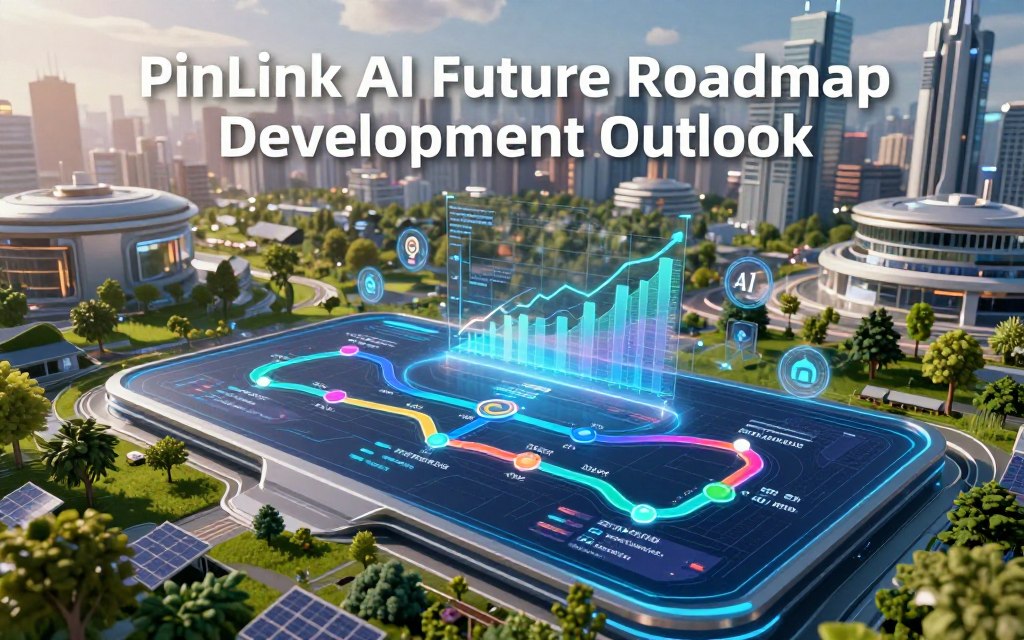
PinLink AI’s roadmap shows a clear plan for updates. The team aims to improve its AI infrastructure.
A big milestone is the launch of DeSci infrastructure in Q4 2025. This is a partnership with Oraichain to support scientific research and data sharing on blockchain.
Other releases include:
- Advanced model training modules for developers.
- Enhanced security protocols for smart contract audits.
- Improved cross-chain communication bridges.
These updates will make PinLink a strong AI layer for Web3.
Long-term Vision: Expansion and New Verticals
PinLink plans to grow beyond its current services. It aims to become a key layer for blockchain apps.
The DeSci launch is just the start. The team wants to explore AI for identity verification and predictive analytics in supply chains. This will open up new uses for the PLINK token and attract more users.
The goal is to build an ecosystem where AI tools are easily used across different blockchain industries.
Market Predictions and Community Sentiment Analysis
Market forecasts help predict PinLink’s growth. They consider the roadmap, adoption, and crypto trends.
A price prediction model for 2025 shows PIN could trade between $2.33 and $3.56 in April. These figures are speculative and based on current data and growth assumptions.
Market sentiment is cautiously optimistic. The community is watching the team’s ability to meet its roadmap.
Positive sentiment often comes with milestone achievements and partnerships. Delays or regulatory issues can affect short-term price prediction models. Investors should research the project and the crypto market.
PinLink AI’s future value will depend on real-world use and the success of its AI services.
Conclusion
PinLink connects artificial intelligence with blockchain in a new way. It uses DePIN and RWA-tokenisation to share ownership of physical assets. This means people can own a part of GPUs or storage.
The platform is very useful. It helps AI developers get the resources they need. At the same time, it lets asset owners make money from what they don’t use.
Those looking for passive income have a new chance. They can invest in AI through special tokens. This is thanks to AI crypto investment.
The $PIN token is key to the system. It’s used to pay for rentals and to share in profits. PinLink’s business model is set up for long-term success.
PinLink (PIN) has a lot of promise in the crypto world. It could change how we use and access AI. But, every investment in crypto comes with risks.
To succeed, PinLink needs to keep improving and engage with its community. It’s an interesting example of how AI and blockchain can work together.
FAQ
What is PinLink AI Crypto?
PinLink AI is a blockchain project. It aims to make high-performance computing for AI more accessible. It combines Decentralised Physical Infrastructure Networks (DePIN) and Real World Asset (RWA) tokenisation.
This creates a marketplace for computational power. It’s mainly for AI developers and firms looking to cut their compute costs.
How does PinLink AI integrate artificial intelligence with blockchain technology?
PinLink AI merges machine learning and blockchain. This makes AI services like predictive analytics and resource optimisation secure and transparent. The blockchain, built on ERC-20, secures transactions and enables a marketplace for computing resources.
What are the primary use cases for PinLink AI within the crypto sector?
PinLink AI has many uses. In DeFi, it powers AI-driven portfolio advisors and automates strategies. It also enhances smart contract security with automated tools.
The platform offers advanced market analysis, including real-time sentiment tracking and risk assessment. It also makes cross-chain interoperability easier, allowing assets and data to move between blockchain networks.
What is the utility of the PLINK token within the ecosystem?
The PLINK token has several uses. It fuels access to AI services, like audits or market forecasts. It also gives governance rights, allowing holders to vote on the protocol’s future.
Users can stake their tokens to earn rewards, often in PIN or ETH. This helps the network’s security and operations.
Can you explain the tokenomics and supply mechanics of the PLINK token?
The PLINK token has a fixed supply of 100 million tokens. Its distribution includes the team, investors, community, and treasury. There are vesting periods to ensure long-term alignment.
The economic model might include deflationary mechanisms like token burns. Staking offers annual yields, backed by real-world asset tokenisation.
Who are PinLink AI’s strategic partners, and what is being built on its platform?
PinLink AI is growing its ecosystem with key partnerships. It’s working with Oraichain and RSS3 to build DeSci infrastructure. The project also offers developer tools and APIs for creating decentralised applications (dApps).
This encourages innovation and expands the platform’s utility.
What makes PinLink AI different from other AI crypto projects?
PinLink AI stands out with its DePIN + RWA model. It focuses on reducing AI computation costs. Unlike competitors, it tokenises real-world infrastructure like GPU power, providing a tangible value proposition for AI developers.
What are the main risks associated with the PinLink AI project?
Key risks include technological execution and regulatory uncertainty. The project relies on advancing AI and blockchain stacks. There are also barriers to mainstream adoption, like technical complexity and competition from established cloud providers.
What is on the future roadmap for PinLink AI?
The project’s roadmap includes launching DeSci infrastructure in Q4 2025 with Oraichain. It aims to expand into new verticals beyond AI compute. Market predictions are speculative, based on adoption and successful development execution.


 By
By